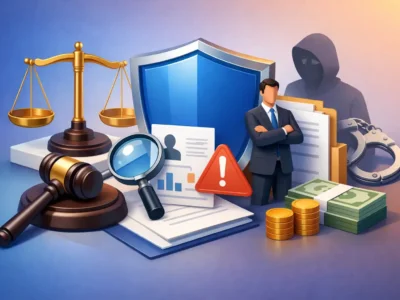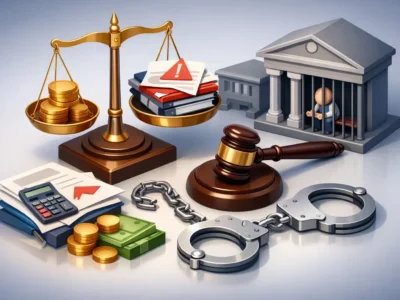

Can Tax Debt Lead to Prosecution?
A lot of people owe taxes. Far fewer get criminally charged. That distinction matters, because if you are asking whether can tax debt lead to prosecution, the real answer is this: tax debt by itself usually triggers collection action, but lying, hiding income, filing false returns, or refusing to comply can turn a tax problem into a criminal case.
That line between civil enforcement and criminal exposure is where people make expensive mistakes. They assume the IRS or state tax agency is just trying to collect money, so they ignore notices, guess their way through an audit, or send records that create bigger problems. When the facts suggest willful conduct instead of simple inability to pay, the stakes change fast.
Can tax debt lead to prosecution if you simply cannot pay?
Usually, no. Owing taxes you cannot afford to pay is not the same thing as committing tax fraud or tax evasion. Many taxpayers fall behind because of job loss, business problems, divorce, illness, or poor bookkeeping. In those cases, the government typically uses civil tools such as liens, levies, wage garnishment, penalties, interest, and payment demands.
The law generally does not criminalize being broke. What draws criminal scrutiny is willfulness. That means the government believes a person knew about the duty to report or pay taxes and intentionally violated that duty. If you filed accurate returns but could not pay the balance, that is a very different case from intentionally omitting income, using nominees to hide assets, destroying records, or filing documents you know are false.
Even so, “I can’t pay” is not a magic shield. If someone claims poverty while moving money through other accounts, dealing in cash, or putting property in another person’s name, investigators may view the problem very differently.
When unpaid taxes become a criminal issue
The question is not only can tax debt lead to prosecution, but what facts make prosecutors care. In most criminal tax cases, debt is just the starting point. The conduct around the debt is what drives exposure.
A case may become criminal when the government believes there was tax evasion, filing a false return, failure to file over multiple years, employment tax violations, or obstruction during an audit or collection matter. Business owners face added risk if they withhold payroll taxes from employees but fail to turn those funds over. The government often treats payroll tax violations harshly because that money was never really the employer’s to keep.
False statements can be just as dangerous as nonpayment. If a taxpayer submits misleading financial disclosures to negotiate a payment plan or settlement, that can create new problems beyond the original debt. The same is true when people backfill records, alter books, coach witnesses, or move assets after learning an investigation has started.
Civil tax case versus criminal tax case
Most tax problems stay civil. That means the government wants to assess the correct tax, add penalties and interest, and collect what is owed. Civil cases can still be severe. Bank levies, garnishments, tax liens, and aggressive collection activity can put major pressure on a family or business.
Criminal tax cases are different. The goal is punishment as well as enforcement. A criminal case can lead to charges, court appearances, probation, restitution, heavy fines, and in serious matters, prison. Once a tax issue starts moving in that direction, every conversation, every document, and every decision matters.
One of the biggest dangers is treating a potentially criminal matter like routine paperwork. People often assume they can explain things away informally. That can hand the government admissions it did not have before.
Common signs your tax problem may be escalating
Some warning signs deserve immediate attention. One is contact from a special agent rather than a regular revenue officer or auditor. Another is repeated questioning about intent, hidden accounts, cash transactions, nominees, or who controlled certain financial decisions. Requests for records covering multiple years, interviews of employees or associates, or subpoenas can also signal that the matter is no longer purely civil.
Silence from the government is not always reassuring either. In some cases, criminal investigators spend months building evidence before making their move. By the time a taxpayer realizes the risk, the file may already be well developed.
What prosecutors usually look for
Prosecutors do not usually build criminal tax cases around a single missed payment. They look for patterns. A consistent failure to file despite substantial income can draw attention. So can maintaining two sets of books, skimming cash, using shell entities without a legitimate purpose, or reporting income one way to lenders and another way to tax authorities.
Intent is often the battlefield. The government may try to prove intent through emails, text messages, accounting practices, inconsistent statements, or evidence that the taxpayer took steps to conceal money or assets. That is why casual explanations can be dangerous. What seems like a simple attempt to smooth things over may later be framed as a false statement.
There are gray areas too. Bad bookkeeping is not automatically fraud. Neither is relying on a preparer who made mistakes, if the taxpayer acted in good faith. But those defenses depend on facts, records, and timing. They do not build themselves.
What to do if you are worried about prosecution
Act early. Waiting usually helps the government, not you. If you suspect your tax problem involves more than unpaid balances, get legal advice before responding in detail, before producing records casually, and before trying to explain intent on your own.
The first goal is to understand what kind of case you actually have. Is this a collection matter, an audit with civil penalties, or something that may involve criminal exposure? The second goal is to protect your position while developing a strategy based on the facts, not fear.
That may include reviewing prior returns, identifying weak points in the record, gathering documents in an organized way, and deciding how communications with the government should be handled. In some cases, corrective filings or negotiated resolutions may help. In others, the priority is avoiding statements or productions that deepen exposure.
If agents have already contacted you, do not assume you can talk your way out of it. Do not destroy records, and do not try to align stories with other people involved. Those moves often create separate problems and make prosecutors far more aggressive.
Why local context can matter in New Mexico
Tax cases may involve federal authorities, state authorities, or both. For New Mexico residents and business owners, that means a problem can move on parallel tracks depending on the taxes at issue and the conduct alleged. A payroll tax issue, for example, may raise different risks than an individual income tax dispute, and a business under pressure may face scrutiny from more than one direction.
That is one reason courtroom experience matters. A tax problem that starts as an administrative dispute can become a case about witness credibility, intent, document handling, and litigation strategy. If the government is building pressure, you need a lawyer who knows how cases are investigated, charged, and tried.
The biggest mistake people make
The biggest mistake is assuming that owing money is the whole issue. Often, it is not. The real danger comes from how the government interprets conduct around the debt and how the taxpayer responds once questions start.
People panic. They send incomplete records. They guess at answers. They speak too freely. They let accountants or third parties handle sensitive contacts without stepping back to assess criminal risk. Sometimes they do nothing at all, hoping the problem stays quiet.
Hope is not a strategy when tax authorities are asking whether a mistake was accidental or deliberate.
If you are under pressure and worried your tax debt may be viewed as something more, get ahead of it now. Bowles Law Firm handles high-stakes defense matters with the kind of trial-ready preparation serious cases demand. Call Now or Request Free Case Review before a tax problem hardens into a prosecution file. The earlier you act, the more options you usually have.