
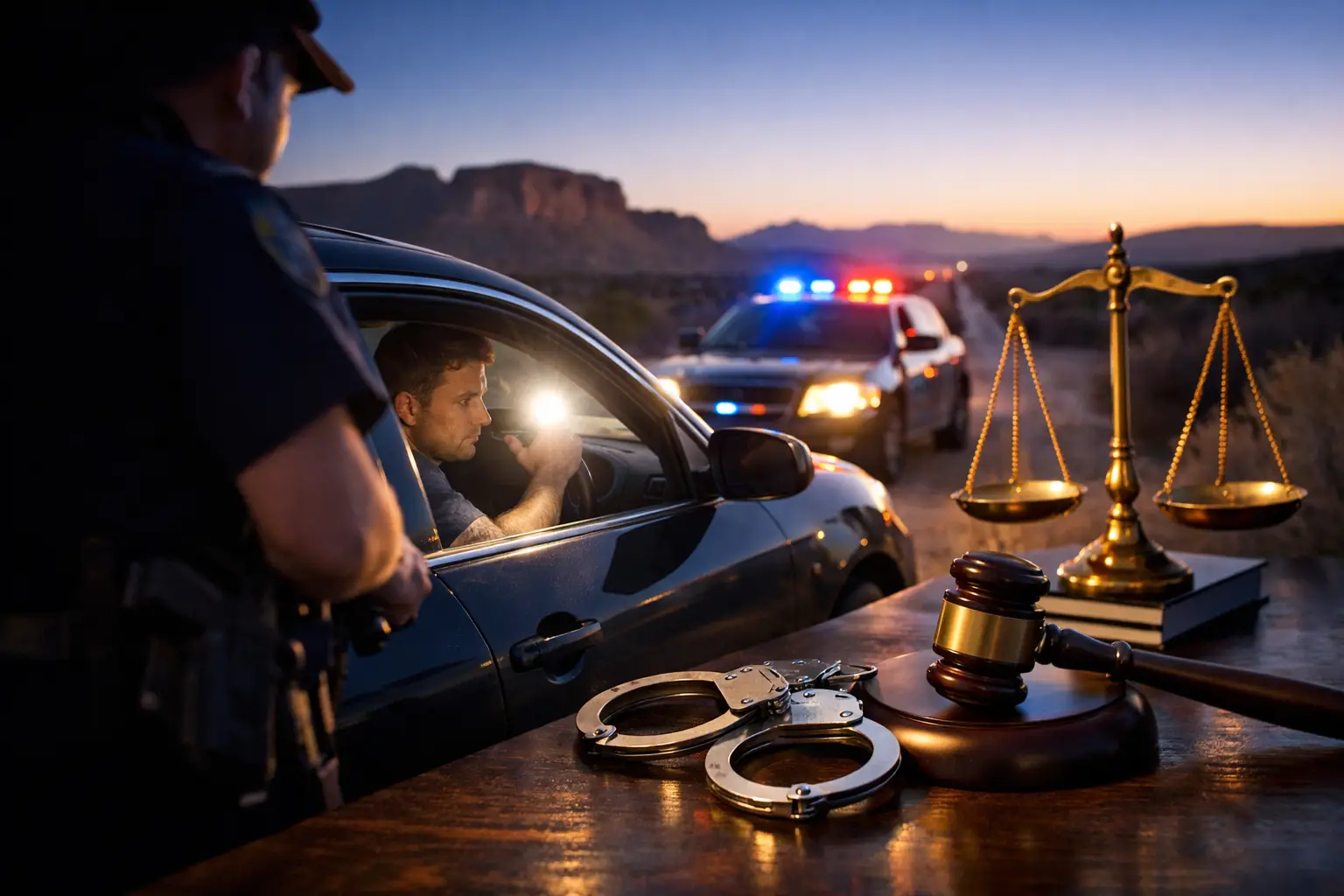
DUI Defense in New Mexico Starts Immediately
A DUI arrest can put your license, job, reputation, and freedom under pressure before you have had time to process what happened. Effective DUI defense starts immediately, because the hours and days after an arrest can affect evidence, deadlines, and the options available to you. A charge is serious. It is not a conviction.
In New Mexico, a DUI case often moves along two separate tracks: the criminal charge in court and the administrative action involving your driving privileges. Each has its own procedures, evidence, and deadlines. Waiting to see how things turn out can give up ground that cannot easily be recovered.
The First Steps After a DUI Arrest Matter
After a DUI arrest, preserve what you can. Write down what happened while details are clear: where you were stopped, what the officer said, whether you were asked to perform field sobriety tests, whether you provided a breath or blood sample, and who may have seen the encounter. Do not edit facts to make them sound better. A defense lawyer needs the unvarnished account to identify what can be challenged.
Keep every document you received, including citations, test paperwork, release papers, and any notice concerning your driver’s license. These documents may contain a deadline for requesting an administrative hearing. In many New Mexico cases, the period to request a hearing is short – often 10 days after receiving notice. Missing that deadline can limit your ability to contest a license revocation, even while the criminal case remains pending.
Do not discuss the allegations on social media or attempt to explain the incident to coworkers, friends, or the arresting officer. Casual statements can be misunderstood, repeated, or used against you. Speak with counsel before making decisions about court appearances, testing, or proposed resolutions.
A DUI Charge Must Be Proven, Not Assumed
Police reports can sound conclusive because they are written from the officer’s perspective. But a report is not the final word. The government still must prove its case under the applicable law and meet constitutional requirements in obtaining evidence.
A careful DUI defense examines the entire chain of events, starting before the lights came on. An officer needs a lawful basis to stop a vehicle. Weaving, speeding, equipment issues, and traffic violations may justify a stop, but vague suspicion does not always do so. If the stop was not legally justified, evidence gathered afterward may be subject to challenge.
The investigation after the stop also matters. Officers commonly cite odor of alcohol, bloodshot eyes, speech, balance, or admissions as signs of impairment. Those observations can have other explanations. Fatigue, allergies, anxiety, medical conditions, roadside conditions, and an officer’s assumptions can influence what appears in a report.
Field sobriety tests are not simple pass-or-fail exercises. They are divided-attention tests that depend on instructions, physical ability, footwear, weather, lighting, surface conditions, and proper administration. A person with an injury, disability, poor balance, or a legitimate difficulty understanding instructions may perform poorly without being impaired by alcohol or drugs.
Breath and Blood Testing Can Be Challenged
Chemical testing is powerful evidence, but it is not beyond question. Breath-test results can be affected by machine maintenance, calibration, operator procedures, observation periods, residual mouth alcohol, and medical conditions. The number reported by a machine does not eliminate the need to investigate how the test was performed.
Blood testing raises a different set of issues. The defense may review why the sample was taken, whether proper procedures were followed, how the sample was stored and transported, and whether the chain of custody is complete. In cases involving alleged drug impairment, the presence of a substance does not automatically establish that it caused impairment at the time of driving. Prescription medications, inactive metabolites, and individual tolerance can require careful analysis.
Video evidence is often critical. Dashboard, body-camera, booking-room, and station video may confirm part of an officer’s account, contradict it, or reveal details left out of the report. A trial-ready lawyer looks beyond the arrest narrative and seeks the underlying evidence.
The MVD Case and Criminal Case Are Different Fights
The Motor Vehicle Division proceeding concerns driving privileges. The criminal case concerns the DUI allegation and potential penalties imposed by a court. The evidence may overlap, but the proceedings are not the same, and an outcome in one does not automatically dictate the outcome in the other.
That distinction matters because a person may need to protect a license quickly while also building a defense for court. Depending on the facts, issues may include whether an officer had reasonable grounds, whether testing procedures complied with requirements, and whether the state can establish impairment or an unlawful alcohol concentration.
Do not assume a temporary license, a notice of revocation, or a court date explains all of your rights. Prompt legal review can clarify what must be done now and what evidence should be preserved for later.
What a Serious DUI Defense Investigation Looks Like
A meaningful defense is not built by simply asking for a favorable deal. Sometimes a negotiated resolution is the responsible path. Other times, the facts, the stop, the testing, or the government’s proof require a more aggressive approach. The right strategy depends on the evidence, your prior record, the allegations, and the consequences you face.
A thorough review may include obtaining reports and video, examining dispatch records, comparing the officer’s written narrative against recorded footage, reviewing breath-test or laboratory documentation, and identifying witnesses. It may also require filing motions to challenge an unlawful stop, an improper search, an involuntary statement, or unreliable testing evidence.
This preparation does more than position a case for trial. It gives you a clearer basis for every decision along the way. A lawyer who prepares for court can assess whether the state’s evidence holds up when tested, rather than accepting the initial accusation as inevitable.
Bowles Law Firm brings a trial-forward approach to high-stakes defense, backed by more than 88 trials and more than 40 appeals across federal, state, and military courts. That experience matters when the government’s case must be examined closely and challenged directly.
Do Not Let Fear Make the Decision for You
People charged with DUI often feel pressure to act quickly without understanding the consequences. Fear of jail, license loss, embarrassment, or lost employment can make the first offer sound like the safest answer. But the right choice depends on the details of your case and the long-term effects of any plea or conviction.
A prior DUI history, a crash, an alleged refusal, a high test result, a minor passenger, or other aggravating allegations can raise the stakes. At the same time, serious allegations do not erase the government’s obligation to prove the case lawfully and reliably. Your defense should reflect both the risk you face and the weaknesses that may exist in the evidence.
If you were arrested for DUI in Albuquerque or elsewhere in New Mexico, act before deadlines pass. Request a case review, bring your paperwork, and get direct answers about the criminal charge, your license, and the evidence being used against you. The strongest next step is not panic. It is informed, decisive action to protect your future.