
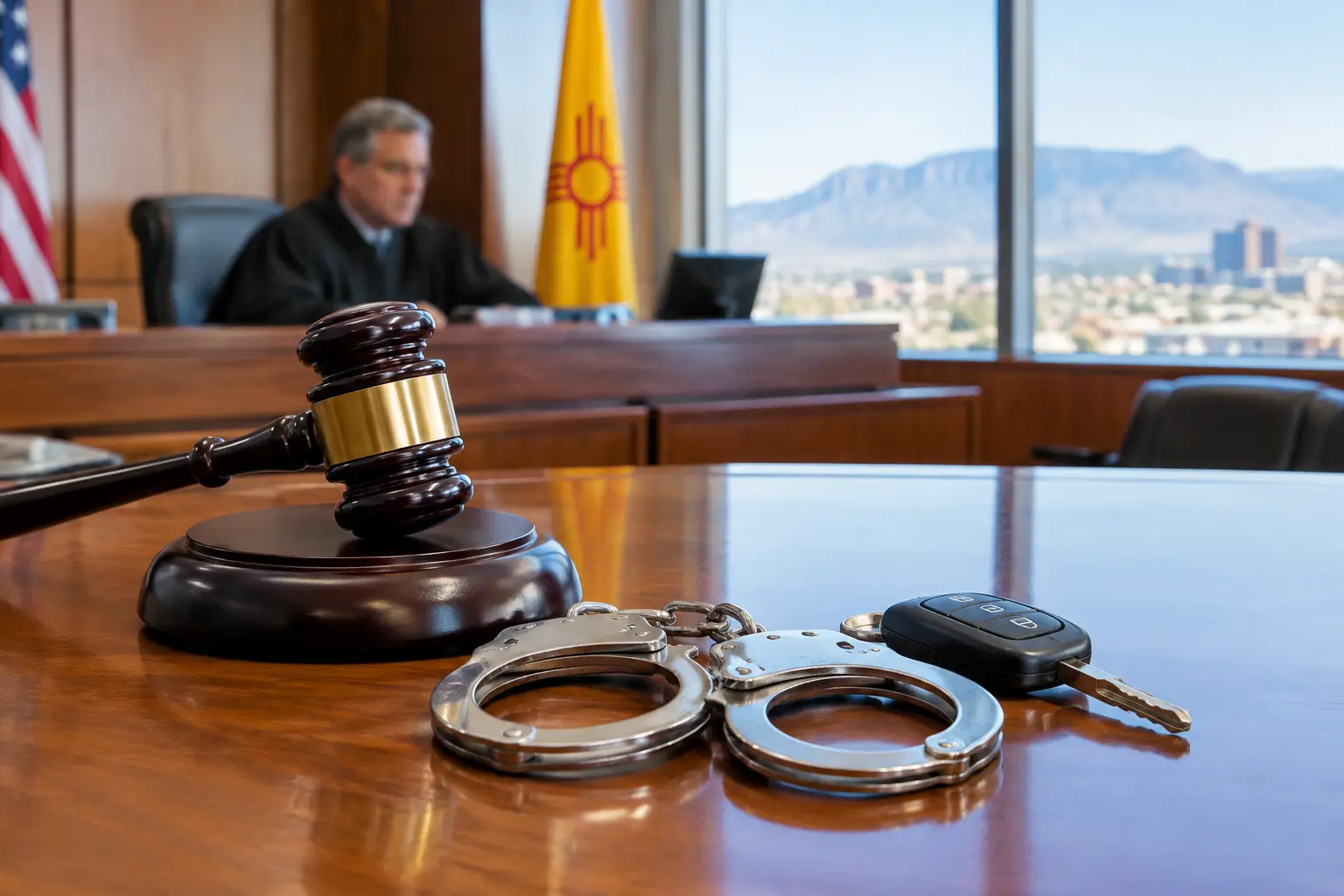
How Albuquerque DUI Courts Work After an Arrest
An Albuquerque DUI arrest creates two urgent problems at once: a criminal case and a potential driver’s license case. Understanding how Albuquerque DUI courts work helps you protect your rights early, avoid missed deadlines, and make informed decisions before a prosecutor or judge sets the direction of your case.
New Mexico generally uses the term DWI, while many people use DUI. Either way, the charge can affect your license, employment, professional standing, finances, and freedom. The facts matter. So does what happened during the traffic stop, field sobriety tests, chemical testing, and booking process.
Where an Albuquerque DUI Case Begins
Most misdemeanor DWI cases arising in Albuquerque are handled in Bernalillo County Metropolitan Court. A first, second, or many third-offense DWI cases may begin there, depending on the allegations and a person’s record. More serious allegations, including certain felony DWI charges, can proceed in District Court.
The process often begins after a police officer stops a driver based on an alleged traffic violation, a report of unsafe driving, a checkpoint, or an accident investigation. The officer may ask questions, request field sobriety tests, and seek a breath or blood test. An arrest can follow even when a driver believes they performed adequately or had a limited amount to drink.
After booking and release, the court issues a case number and schedules an initial appearance or arraignment. The paperwork may list charges such as aggravated DWI, DWI, open container, reckless driving, or other allegations. Do not assume every charge will remain in place simply because it appears on the citation. The state still has to prove its case with admissible evidence.
The Criminal Court Track and the MVD Track Are Separate
A common and costly mistake is treating the criminal case as the only issue. A DWI arrest may also trigger an administrative license revocation process through the New Mexico Motor Vehicle Division. That process is separate from the court prosecution.
The deadline to request an MVD hearing can be short. Missing it may mean losing the opportunity to challenge the administrative revocation, even while the criminal charge remains unresolved. The hearing may address issues such as whether the officer had reasonable grounds to believe the driver was impaired, whether the driver was properly advised, and whether a breath or blood test was refused or produced a specified result.
The MVD process has limits. Winning an administrative hearing does not automatically dismiss the criminal charge, and an unfavorable MVD result does not establish criminal guilt. Still, testimony, records, and procedural errors identified early can matter to a defense strategy in both tracks.
What Happens at Arraignment
At arraignment, the judge informs the defendant of the charges and addresses legal representation, release conditions, and the next court setting. A not-guilty plea is commonly entered at this early stage so the defense can obtain and review the evidence. It is not the moment to explain the entire case to the judge or argue facts without preparation.
Release conditions can be restrictive. Depending on the allegations and prior history, they may include no alcohol or controlled substances, no driving without a valid license and insurance, ignition interlock requirements, testing, counseling, or check-ins. Violating a release condition can create new trouble and may lead the court to reconsider release.
Take every condition literally until a lawyer clarifies it. If a condition is impractical, unlawful, or unsupported by the facts, counsel can ask the court to modify it. Ignoring it is not a strategy.
Evidence Review Drives the Defense
DWI cases are not decided by a police report alone. The report is one version of events. A thorough defense examines the underlying evidence: dispatch information, lapel and vehicle video, 911 recordings, witness statements, field sobriety testing, breath-test records, blood-draw procedures, laboratory documentation, and the officer’s training history.
The critical question is not whether an officer wrote that someone appeared impaired. The question is whether the government can prove each required element beyond a reasonable doubt using reliable, lawfully obtained evidence.
For example, an allegedly improper lane movement may not justify a prolonged investigation. Field sobriety tests can be affected by road surface, footwear, weather, injury, age, medical conditions, or unclear instructions. Breath and blood evidence can raise separate questions about collection, handling, machine performance, calibration, timing, and chain of custody.
A strong defense does not rely on one generic argument. It tests the particular stop, investigation, arrest, and testing procedure in the actual case.
Pretrial Motions Can Change the Case
Before trial, the defense may file motions challenging evidence or asking the court to enforce procedural rules. A motion to suppress may argue that the stop, detention, arrest, or search violated constitutional protections. Other motions may challenge the foundation for scientific evidence, seek discovery the state failed to provide, or require the prosecutor to clarify the allegations.
A successful motion can significantly narrow the case. It can also expose weaknesses that affect negotiations. But motions require careful factual investigation and legal research. Filing every conceivable motion without a sound basis can waste time and reduce credibility.
How Albuquerque DUI Courts Work Before Trial
After arraignment, the case typically moves through pretrial settings. The prosecutor and defense exchange evidence, discuss unresolved discovery, address motions, and evaluate possible resolutions. A plea offer may be presented. Whether to accept one depends on the strength of the evidence, the exact terms, the driver’s record, collateral consequences, and the realistic trial risks.
There is no universal “good deal” in a DWI case. A disposition that may be reasonable for one person can be damaging for another. A commercial driver, licensed professional, person with a prior conviction, or someone facing an aggravated allegation may have concerns that go far beyond a fine or a short court requirement.
If the case does not resolve, it can be set for a bench trial or jury trial, depending on the charge and procedure. At trial, the prosecutor presents witnesses and evidence. The defense has the right to cross-examine witnesses, challenge reliability, object to improper evidence, present a defense, and hold the state to its burden of proof.
A defendant does not have to prove innocence. The prosecution must prove guilt beyond a reasonable doubt. That standard matters most when an officer’s interpretation conflicts with video, objective records, or innocent explanations for a driver’s conduct.
Sentencing, Interlock, and Repeat-Offense Exposure
A conviction can bring consequences that vary sharply based on the charge, alleged test result, refusal allegation, prior DWI history, accident claims, and aggravating factors. Possible consequences include jail, probation, fines and fees, community service, alcohol screening or treatment, victim impact programming, ignition interlock requirements, and license consequences.
New Mexico treats repeat DWI allegations seriously. Prior convictions can increase exposure, and later offenses can become felonies. An aggravated DWI allegation may also carry mandatory jail consequences in certain circumstances. These cases demand prompt attention, not a wait-and-see approach.
The court may also require compliance reviews after sentencing. Missing treatment, testing, interlock, or reporting obligations can result in probation violations and additional sanctions. Keep every document, calendar every deadline, and obtain written confirmation when a program or provider reports completion.
What to Do Before Your First Court Date
Do not discuss the facts of the arrest with friends, coworkers, or on social media. Preserve any information that may help explain where you were, what you consumed, your medical condition, or the condition of your vehicle. Keep copies of citations, release paperwork, tow records, and MVD notices.
Most importantly, do not miss court. Failing to appear can lead to a bench warrant and make an already difficult situation worse. If you cannot attend because of a genuine emergency, act quickly through counsel to notify the court and seek appropriate relief.
A DWI charge deserves a defense built on facts, not assumptions. Bowles Law Firm brings trial-focused preparation and direct advocacy to high-stakes criminal cases. Request a case review promptly so deadlines, video evidence, and the decisions that shape your case are not left to chance.
The next step is simple: protect your license, follow every court order, and get informed legal advice before making a decision that cannot easily be undone.