
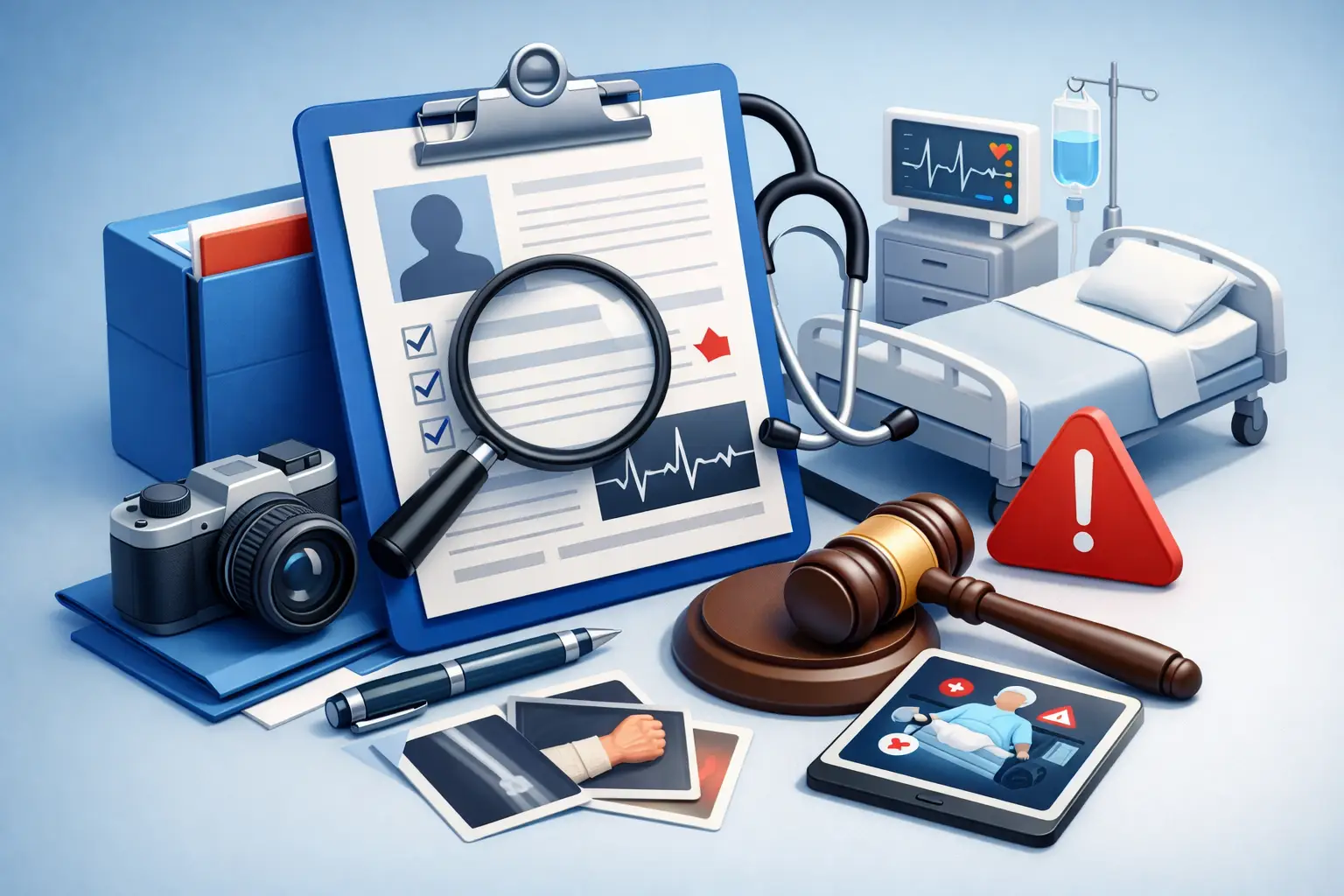
How to Document Medical Negligence
When something feels wrong after medical treatment, people often second-guess themselves. They wonder whether the complication was unavoidable, whether a doctor will admit a mistake, or whether speaking up will make things harder. If you are trying to figure out how to document medical negligence, the first priority is simple – preserve facts before they disappear.
Medical negligence cases are won or lost on details. A vague memory of what a doctor said is not as strong as a dated note made that same day. A missing discharge instruction can matter. So can a photo, a medication bottle, a billing statement, or the name of the nurse who was in the room. Good documentation does not prove every case by itself, but it can protect your ability to show what happened and when it happened.
Why documentation matters in a medical negligence case
Hospitals, clinics, and insurers usually begin building their side of the story early. Patients and families often do not. That imbalance can hurt a valid claim.
In a medical malpractice case, the legal question is not just whether the outcome was bad. The question is whether a provider failed to meet the accepted standard of care and caused injury. That means the timeline matters. The records matter. The changes in your condition matter. If there was a delayed diagnosis, a surgical error, a medication mistake, or a failure to respond to obvious warning signs, documentation helps show the sequence clearly.
It also helps your lawyer evaluate the case faster. An experienced trial lawyer does not need guesswork. He needs the chart, the dates, the symptoms, the providers involved, and the harm that followed.
How to document medical negligence from day one
Start with a written timeline. Do it as soon as possible, while the memory is still fresh. Include appointment dates, who treated you, what symptoms you reported, what you were told, what tests were ordered or not ordered, and what happened next. If a provider brushed off a serious complaint or failed to act after test results came back, write that down in plain language.
Do not worry about legal terms. Just be accurate. If you do not remember something exactly, say that. Never fill gaps with guesses.
After that, gather every document you already have. That may include discharge papers, prescriptions, after-visit summaries, referral forms, imaging reports, lab results, billing statements, insurance explanation of benefits forms, and any messages exchanged through a patient portal. Save everything in one place.
Photos can also matter. If there is an infection, visible injury, surgical wound issue, bed sore, bruising, swelling, or medical device problem, take clear pictures over time. Use the date stamp if available. Consistent photo documentation can show progression in a way words cannot.
Request your medical records quickly
One of the most important steps in how to document medical negligence is getting complete medical records from every relevant provider. Do not rely on a single hospital summary. In many cases, the important details are buried deeper in the chart.
Ask for full records, not just highlights. That may include physician notes, nursing notes, medication administration records, operative reports, anesthesia records, fetal monitoring strips in birth injury cases, lab reports, radiology images and reports, pathology reports, discharge instructions, and follow-up records. If emergency care was involved, get ambulance records too.
Keep a copy of each request you make. Note the date, who received it, and what was provided. If records arrive incomplete, follow up. Missing pages are common, and they can matter.
If your condition required treatment from a second provider after the mistake, get those records as well. They may document the damage, the correction effort, and the opinion of later treating physicians about what went wrong.
Keep a daily symptom journal
A strong journal does more than say you were in pain. It tracks how the injury affected your daily life.
Write down your pain level, symptoms, medications, physical limitations, missed work, follow-up appointments, and changes in mobility, sleep, appetite, mood, or independence. If you needed help bathing, driving, lifting your child, or managing basic tasks, include that. If the injury caused emotional strain or new financial pressure, document that too.
Be consistent and factual. A short daily entry is better than a dramatic one written weeks later. Juries and insurance companies tend to trust records made in real time.
Save communications and identify witnesses
Medical negligence cases often involve conversations that never make it into the chart. Save voicemails, emails, portal messages, text messages, and letters from providers, hospitals, pharmacies, or insurers. If a doctor changed his explanation later, those messages may help show it.
Also identify anyone who saw what happened. A spouse in the exam room, an adult child at the hospital, or a friend who heard the discharge instructions may become an important witness. Write down names and contact information while it is easy to find.
If a provider made a statement that sounded like an admission, document the exact words as best you can and note who heard them. Do not embellish. Precision carries more weight than anger.
Document the financial damage too
A medical negligence claim is not only about the error. It is also about the harm caused by that error.
Save bills, pharmacy receipts, travel costs for treatment, medical equipment invoices, and records showing lost income. If you missed work, keep pay stubs, employer letters, or attendance records. If a family member had to stop working to care for you, document that loss as well.
Future damages may matter too, especially in serious injury cases. You do not need to calculate them yourself, but you should preserve evidence that points to ongoing treatment needs, permanent limitations, or reduced earning ability.
What not to do while documenting a claim
There are a few mistakes that can weaken a case.
Do not alter documents, rewrite old notes, or exaggerate symptoms. Once credibility is damaged, it is hard to recover. Do not post detailed updates on social media about the incident, your recovery, or your legal plans. Defense lawyers look for statements and photos they can use against you.
Do not assume an apology means the provider will take responsibility. And do not assume a bad outcome always means malpractice. Some cases involve negligence. Some involve known risks that occurred despite proper care. The point of documentation is to preserve evidence so that distinction can be evaluated honestly.
When the case involves a loved one who cannot document it
In wrongful death cases, birth injury cases, or situations where the patient is incapacitated, families often have to build the record themselves. Start with the same core steps – timeline, records, photos, bills, and witness names – but also document what changed in the person’s condition before and after the event.
Families are often the first to notice that warnings were ignored, symptoms escalated, or discharge happened too soon. Those observations can be important, especially when they line up with the medical chart.
This is also where speed matters. Staff change, memories fade, and records requests take time. If the injury is catastrophic or a death occurred, speak with a trial lawyer quickly.
When to call a lawyer
If you are researching how to document medical negligence, there is a good chance you already suspect something went seriously wrong. You do not need every answer before making the call.
A lawyer can determine what records matter most, whether expert review is likely needed, and whether the facts point to a malpractice claim under New Mexico law. That matters because medical cases are document-heavy, expert-driven, and aggressively defended. The earlier a strong legal team gets involved, the better the chance of preserving key evidence and avoiding mistakes.
Bowles Law Firm handles high-stakes litigation with a trial-first mindset, and that matters when hospitals and insurers know the case may end up in court. If your injury followed a misdiagnosis, surgical error, medication mistake, or failure to respond to obvious symptoms, request a free case review now.
The strongest thing you can do today is not argue with the provider or wait for someone else to explain what happened. Start building the record, protect the facts, and get experienced legal eyes on the case before more time is lost.