
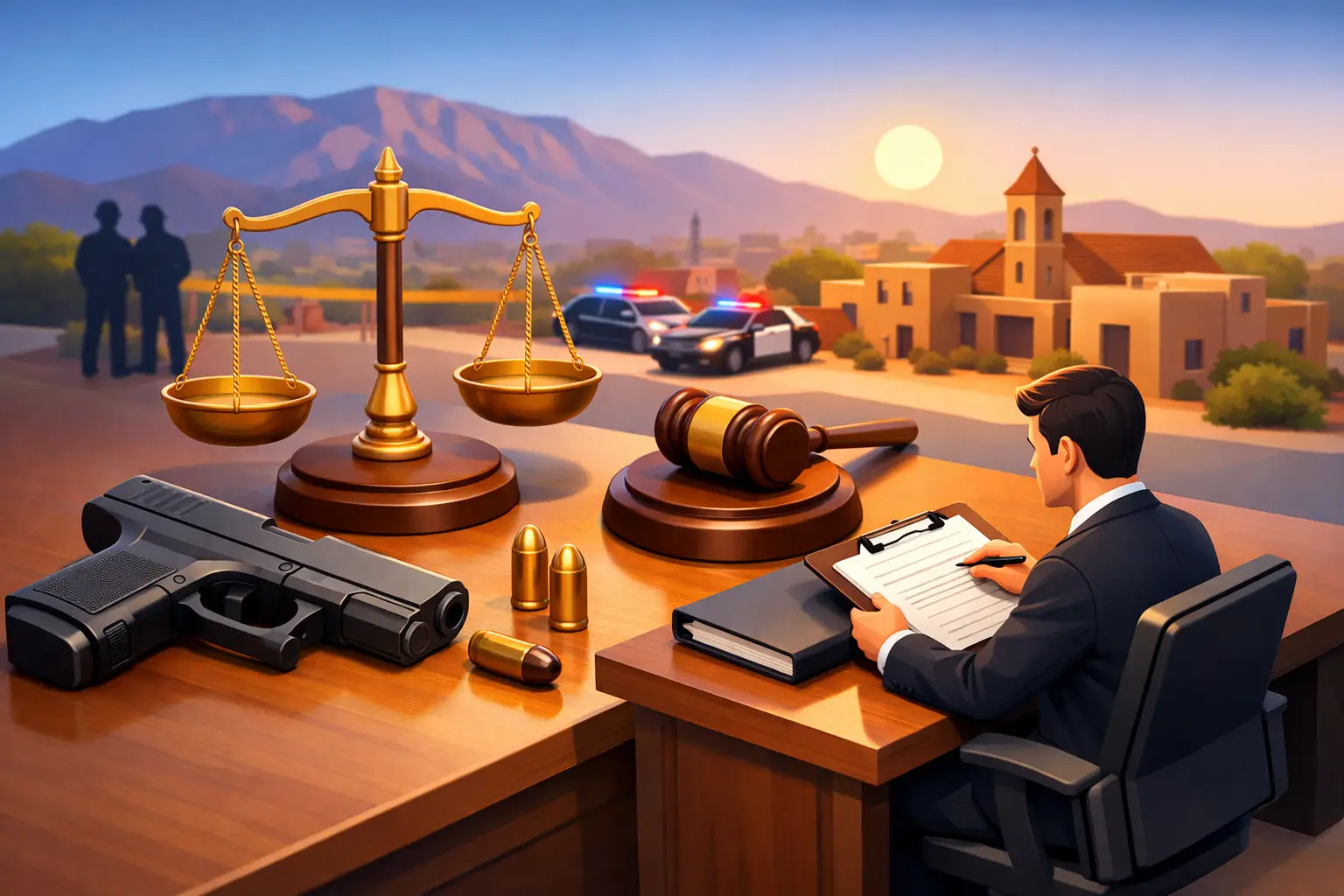
Accidental Shooting Lawyer Albuquerque Cases
A gun goes off in a home, on private property, or during what someone calls a “safe” handling moment, and life changes in seconds. If you are searching for an accidental shooting lawyer Albuquerque residents can call, you are likely dealing with trauma, medical bills, police questions, or the death of someone you love. This is the stage where facts matter, timing matters, and the lawyer you choose matters.
Accidental shooting cases are rarely simple. Someone may insist it was a mistake, but that does not answer the legal question of responsibility. A so-called accident can still involve negligence, reckless conduct, unsafe storage, intoxication, poor supervision, or a complete failure to follow basic firearm safety rules. When the harm is severe, families need more than sympathy. They need a trial-ready advocate who can find out exactly what happened and push the case forward.
What an accidental shooting lawyer in Albuquerque actually investigates
These cases turn on details, not assumptions. The first issue is usually how the firearm discharged. That can involve witness statements, police reports, photographs, body camera footage, 911 calls, medical records, ballistic evidence, and the physical condition of the weapon itself.
A serious lawyer will also look at who controlled the gun, who had access to it, whether it was loaded when it should not have been, and whether the person handling it had been drinking or using drugs. In some cases, the key question is not who pulled the trigger, but who created the dangerous situation in the first place.
That is where many victims and families get misled. They hear “it was an accident” and assume there is no case. That is not how civil liability works. If a person failed to act with reasonable care and somebody got shot, there may be a claim for compensation. If the conduct was more extreme, there may also be exposure in criminal court.
When an accidental shooting becomes a civil case
An accidental shooting can support a personal injury claim or a wrongful death lawsuit. The central issue is whether another party’s negligence caused the injury. That might include unsafe firearm handling, negligent supervision of a minor, careless storage of a weapon, or allowing an obviously dangerous person access to a gun.
Sometimes liability extends beyond one person. A property owner may share responsibility if dangerous conditions were tolerated. A business or organization may face scrutiny if the shooting happened during an event, training setting, or activity where safety protocols were ignored. The facts drive the case.
There are also cases where the injured person is blamed from the start. Insurance companies and defense lawyers often look for any argument that reduces payout. They may claim the victim knew the risk, mishandled the weapon, or caused the incident. Those defenses are not automatic winners. They must be tested against evidence.
Common accidental shooting scenarios
Not every case looks the same, and that affects both liability and damages. Some of the most serious claims arise from shootings in homes involving unsecured firearms and children. Others involve hunting trips, informal target shooting, horseplay with guns, cleaning a loaded weapon, or handling a firearm during an argument when the shooter later says they did not mean for it to fire.
The legal analysis changes with the setting. A shooting involving a child often raises strong questions about storage, supervision, and foreseeability. A shooting among adults may focus more on handling, impairment, training, warnings, and whether anyone ignored known safety rules. If the weapon malfunctioned, a product-related claim may also need to be evaluated, though those cases can become technically demanding and expensive to litigate.
That is why broad advice from the internet is not enough. These cases depend on the exact sequence of events, the physical evidence, and how quickly your legal team moves to preserve proof.
Why early action matters after an accidental shooting
Evidence does not sit still. Witnesses change their stories. Physical scenes get cleaned up. Surveillance footage disappears. Phones are replaced. In some cases, the gun itself may be moved, altered, or stored in a way that affects later testing.
The earlier a lawyer gets involved, the better the chance of locking down critical evidence. That may include sending preservation notices, obtaining records, coordinating with experts, and making sure your side is not relying only on the investigation done by law enforcement or an insurance carrier.
That point matters because criminal and civil cases are not the same thing. Police investigate possible crimes. Civil lawyers build claims for accountability and financial recovery. Sometimes those paths overlap. Sometimes they do not. A decision not to file criminal charges does not automatically mean there is no civil case.
What damages may be available
When someone survives an accidental shooting, the losses are often catastrophic. Emergency care, surgery, rehabilitation, permanent disability, pain, emotional distress, and lost income can place enormous pressure on a family. A civil claim is meant to address those losses, not excuse what happened.
In a fatal case, surviving family members may have the right to pursue wrongful death damages. That can include the financial impact of the loss as well as the human cost. No lawsuit fixes that kind of damage, but it can provide support, accountability, and a formal legal response to conduct that should never have happened.
The value of a case depends on several moving parts. The severity of the injury matters. So does the quality of the evidence, the available insurance, the identity of the responsible parties, and whether the defense can point to disputed facts. Anyone promising a number too early is guessing.
Choosing an accidental shooting lawyer Albuquerque families can trust
This is not a small-claims matter and it should not be treated like routine intake. You want a lawyer who is comfortable with high-stakes litigation, serious injuries, and cases that may end up in front of a jury. Trial readiness changes how a case is prepared and how the other side values risk.
Ask direct questions. Who will handle the case? How often does that lawyer go to trial? Have they dealt with wrongful death or catastrophic injury claims before? Can they manage a case that may involve both civil exposure and parallel criminal issues?
Those questions are practical, not aggressive. In a firearm injury case, pressure builds fast. Families need clear answers and decisive leadership. A lawyer who prepares every case for court is often in a stronger position during settlement talks because the defense knows empty threats will not move the case.
For people facing that pressure in New Mexico, Bowles Law Firm brings a trial-forward approach built on extensive courtroom and appellate experience. That matters when liability is disputed and the stakes are high.
What to do right now if your family is dealing with an accidental shooting
Start by protecting the evidence and protecting yourself. Keep every medical record, discharge paper, bill, photograph, and communication related to the incident. Do not assume police reports tell the full story. Do not rely on casual explanations from the shooter, property owner, or insurer.
If you are being contacted by an insurance company, be careful. Early statements can be used to limit or deny the claim later. If there is a criminal investigation, the overlap between statements, records, and civil liability can become complicated fast. That is another reason to get legal advice early rather than trying to sort it out alone.
Most of all, do not let the word “accidental” shut down the conversation. In the law, accidents still have causes. Those causes can still support a claim. And when a preventable shooting leaves someone seriously injured or takes a life, accountability should not depend on who tells the story first.
If you need answers, call now or request a free case review at https://bowleslawfirm.com. The right case strategy starts with a hard look at the facts, and the sooner that work begins, the stronger your position usually is.
A serious injury case does not need a soft response. It needs evidence, judgment, and a lawyer prepared to act before the window to protect your claim starts closing.


