
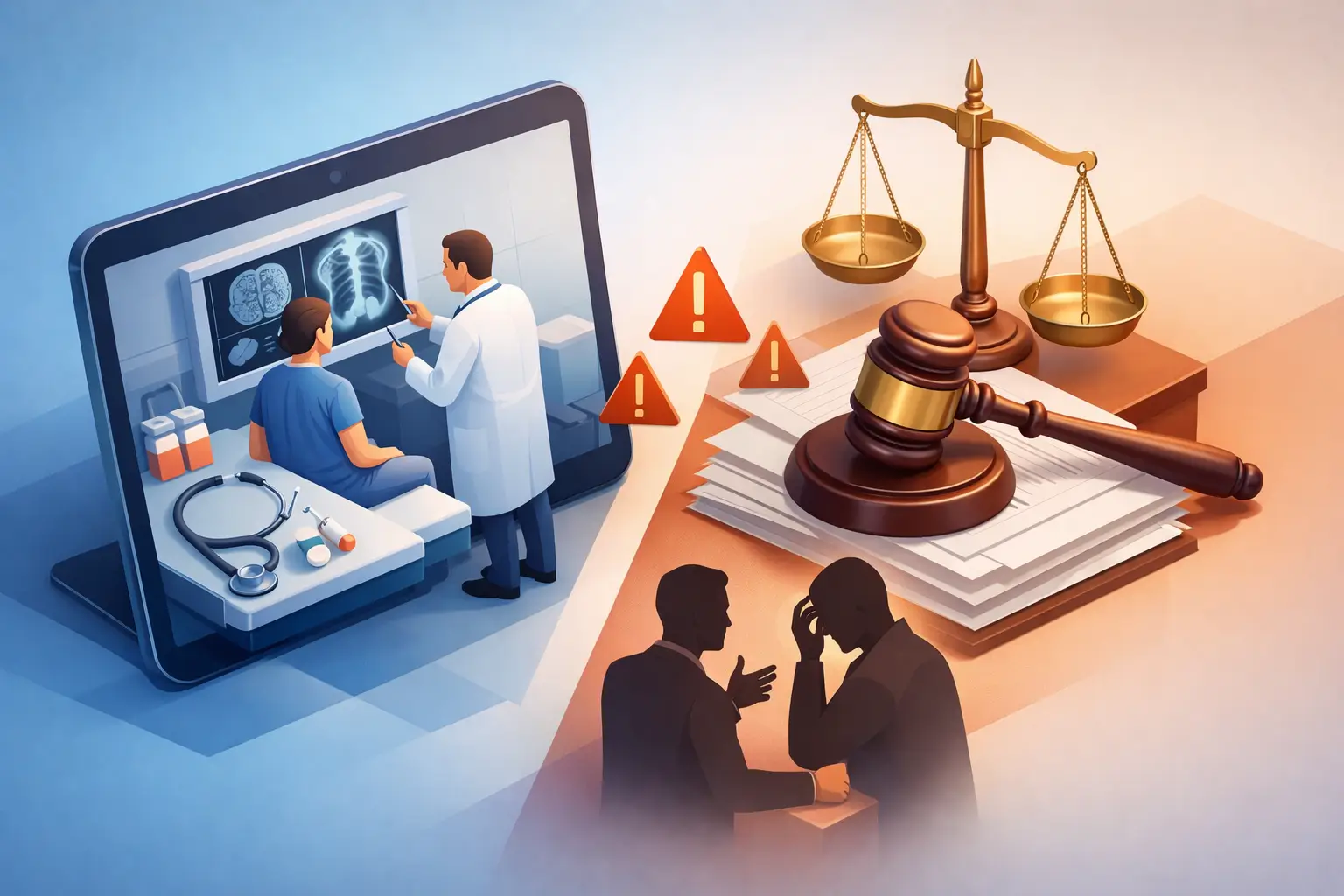
When a Missed Diagnosis Becomes a Lawsuit
A doctor does not have to be perfect. But when a physician misses signs that a reasonably careful doctor would have caught, and that delay changes the outcome, the law may step in.
That is the core of a failure to diagnose malpractice lawsuit. These cases are not about bad luck or a condition that was impossible to detect. They are about preventable medical failure – a missed cancer, a stroke sent home as a headache, an infection dismissed until it turns critical, or a heart attack mistaken for something minor.
For patients and families, the question usually starts the same way: Was this just a hard case, or was it negligence? The answer depends on the medicine, the records, the timing, and whether the missed diagnosis caused real damage that likely could have been reduced or avoided.
What a failure to diagnose malpractice lawsuit really claims
A failure to diagnose malpractice lawsuit does not simply argue that a doctor got it wrong. Medicine involves judgment calls, overlapping symptoms, and conditions that can present in unusual ways. The legal claim is narrower and more demanding.
You generally must show that a medical provider failed to act as a reasonably competent provider would have acted under similar circumstances. That might mean ignoring symptoms, failing to order appropriate testing, misreading results, not referring the patient to a specialist, or not following up on serious red flags.
You also have to prove that the mistake mattered. If the same outcome would have happened even with a timely diagnosis, the case becomes much harder. On the other hand, if an earlier diagnosis would likely have led to treatment, prevented complications, improved survival odds, or reduced pain and disability, the claim is much stronger.
That causation issue is where these cases are often won or lost.
The medical errors that often lead to missed diagnosis claims
Some conditions appear again and again in failure to diagnose cases because delay can be devastating. Cancer is one of the most common. A tumor missed on imaging, abnormal lab work that was never acted on, or symptoms repeatedly brushed aside can cost a patient valuable treatment time.
Stroke cases are also common. When facial drooping, weakness, speech changes, confusion, or sudden severe headache are not recognized as urgent, the treatment window can close fast. The same is true with heart attacks, especially when symptoms are written off as anxiety, indigestion, or muscle strain.
Serious infections, sepsis, appendicitis, internal bleeding, meningitis, and pulmonary embolism also show up frequently in litigation. In children, delayed diagnosis can involve meningitis, birth injuries, or respiratory distress. In older adults, it may involve falls, fractures, medication complications, or infections that were missed until they became life-threatening.
A poor outcome alone is not enough. The issue is whether the provider missed something they should have recognized, and whether that failure caused additional harm.
What has to be proven in a failure to diagnose case
Most medical malpractice claims, including a failure to diagnose malpractice lawsuit, turn on four basic points.
First, there must have been a provider-patient relationship. In plain terms, the doctor or facility must have owed the patient a professional duty of care.
Second, there must have been a breach of the standard of care. That means the provider acted below what a reasonably competent medical professional would have done in the same situation.
Third, that breach must have caused injury. This is not always simple. In missed diagnosis cases, lawyers often have to prove that the delay made the condition worse, reduced treatment options, shortened life expectancy, or caused unnecessary pain, disability, or death.
Fourth, there must be damages. Those may include added medical bills, lost income, future care needs, physical pain, emotional suffering, and in some cases wrongful death damages for surviving family members.
These are expert-driven cases. Medical records matter. Imaging matters. Lab reports matter. Timeline matters. What was said, what was charted, what was ordered, and what was ignored can become central evidence.
Why these cases are harder than people expect
Patients often know something went wrong long before they know whether they can prove it. That gap matters.
Hospitals and insurers usually defend these cases aggressively. They may argue the symptoms were vague, the condition was rare, the patient failed to report key information, or the disease was already too advanced to change the outcome. They may also claim the provider exercised reasonable judgment, even if the result was tragic.
This is why a real case review has to go beyond suspicion. The records must be examined by someone who understands trial strategy, medical proof, and how juries evaluate negligence. A case may look strong emotionally but weak legally. The reverse is also true.
There are trade-offs here. Some missed diagnosis cases involve catastrophic harm and substantial damages, but they also require extensive expert review and aggressive litigation. Others involve obvious delay but limited provable damages. A lawyer should tell you the difference early, not after months of uncertainty.
Warning signs that medical negligence may be involved
No single fact proves malpractice, but certain patterns should raise concern. A provider repeatedly dismisses worsening symptoms without meaningful workup. Abnormal test results are never communicated. A radiology report notes a concerning finding and no one follows up. A patient is sent home from the emergency room and quickly returns with a medical crisis. Months pass before a serious condition is finally diagnosed, even though the signs were there earlier.
Another red flag is inconsistency in the records. If the chart says symptoms were mild but family members remember repeated reports of severe pain, neurological changes, or dangerous warning signs, that discrepancy deserves attention.
If a second doctor later says the problem should have been caught sooner, that does not automatically prove the case, but it is worth investigating.
What to do if you suspect a missed diagnosis
Act quickly, but do not guess. Start by gathering the basic documents: discharge papers, test results, imaging reports, prescription history, follow-up instructions, bills, and any written communication from providers. If a family member was involved, write down what they observed and when.
Do not alter records or post detailed accusations online. Do not rely on what a nurse, friend, or internet forum says about whether you have a case. Get the records reviewed by a lawyer who handles serious medical negligence claims and is prepared to litigate if necessary.
Timing matters. New Mexico, like every state, has legal deadlines that can affect your right to bring a claim. There may also be special procedural rules depending on the provider and the facts. Waiting too long can damage or destroy an otherwise valid case.
A focused legal review should answer a few direct questions: Was the diagnosis unreasonably delayed or missed? Did that delay change the outcome? Who is legally responsible? And what will it take to prove it?
What compensation may be available
If the evidence supports a claim, compensation depends on the harm caused by the delay. In many cases, that includes additional medical treatment, hospitalization, surgeries, rehabilitation, lost wages, loss of future earning capacity, and pain and suffering.
In fatal cases, surviving family members may have a wrongful death claim. That can involve funeral expenses, loss of financial support, and the human losses that follow a preventable death.
The value of a case is never just about the diagnosis itself. It depends on what the delay cost the patient in time, health, function, and survival. A six-month delay in diagnosing one condition may have minor consequences. A six-hour delay with stroke, sepsis, or internal bleeding can change everything.
Why trial experience matters in these cases
Medical malpractice insurers do not pay substantial claims because a demand letter sounds upset. They pay when the evidence is developed, the experts are credible, and the other side believes your lawyer can prove the case in court.
That is especially true in a failure to diagnose malpractice lawsuit. These claims often become battles of experts, timelines, and credibility. The side that prepares for trial from the start is usually in the stronger position.
At Bowles Law Firm, that trial-first mindset shapes every serious injury case review. If you believe a doctor, hospital, or medical provider missed a diagnosis that should have been made, request a free case review at https://bowleslawfirm.com or call now. The sooner the records are secured and evaluated, the sooner you can get a straight answer.
When medicine misses what should have been seen, families are left carrying the damage. You deserve more than excuses. You deserve clarity, accountability, and a lawyer ready to act.