
An Evidence Suppression Example in a Criminal Case
A single evidence suppression example can show why the first minutes of a police encounter matter so much. If officers stop a driver without lawful grounds, extend the stop without justification, or search a vehicle without a valid legal basis, the consequences may reach far beyond the roadside. Drugs, weapons, statements, test results, or other evidence found afterward may be challenged in court.
That does not mean evidence is automatically thrown out whenever a person believes an officer acted unfairly. Suppression is a legal remedy with specific rules, deadlines, and factual questions. But when the government obtained critical evidence in violation of constitutional protections, a focused motion to suppress can change the direction of a criminal case.
What Suppression of Evidence Means
Evidence suppression means asking the judge to prohibit the prosecution from using particular evidence at trial. The issue is usually not whether the evidence exists. The issue is how law enforcement obtained it.
The Fourth Amendment protects people against unreasonable searches and seizures. In practical terms, police generally need a legally valid reason to stop, detain, search, or seize. The Fifth Amendment can also matter when a statement was obtained through improper custodial questioning. In some cases, New Mexico constitutional protections may provide additional grounds for a challenge.
A suppression motion forces the government to show its work. Officers may need to testify about what they saw, why they acted, what was said, when the encounter changed from voluntary contact to detention, and how any search occurred. Video footage, dispatch records, body-camera recordings, reports, and witness accounts can expose gaps between a report and what actually happened.
Evidence Suppression Example: A Traffic Stop That Goes Too Far
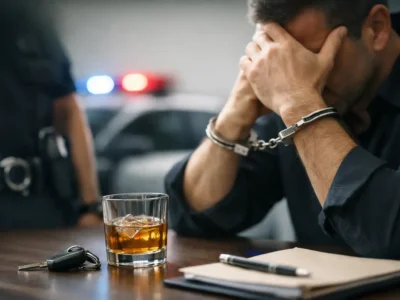
Consider a driver stopped in Albuquerque for an alleged broken taillight. The officer approaches, obtains the driver’s license and registration, and runs the usual records checks. At that point, the officer has authority to address the traffic violation and complete the related tasks within a reasonable time.
Now assume the records checks are complete, the citation is ready, and there is no new sign of criminal activity. Instead of ending the stop, the officer keeps the driver waiting while requesting a drug-detection dog. Twenty minutes later, the dog arrives, alerts on the vehicle, and officers find illegal drugs in the trunk.
The defense may argue that the continued detention was unlawful. A routine traffic stop cannot be extended merely because an officer has a hunch. The government may try to establish reasonable suspicion based on specific facts, such as conflicting stories, visible contraband, or conduct the officer can clearly explain. Nervousness alone, vague impressions, or an unsupported feeling that something was off may not be enough.
If the judge finds that the officer unlawfully prolonged the stop, the drugs found after that extension may be suppressed. Without that evidence, the prosecution may face a substantially weaker case. Depending on the charges and the remaining proof, the case could be dismissed, reduced, or resolved on better terms.
That is the core lesson of this evidence suppression example: the legality of the initial stop is only the beginning. The duration, scope, questioning, search, and sequence of events all matter.
Other Situations Where Suppression May Apply
Illegal searches are not limited to vehicle stops. Suppression issues often arise after searches of homes, phones, bags, hotel rooms, and digital accounts. The details control the analysis.
A warrant may be challenged when it lacks probable cause, fails to describe the place or items to be searched with sufficient particularity, or rests on materially false or reckless information. A warrantless search may be challenged when officers claim consent, exigent circumstances, a search incident to arrest, or another exception to the warrant requirement.
Consent cases deserve close scrutiny. Police do not always need a warrant if a person freely and voluntarily consents to a search. But consent is not valid simply because an officer asked and someone eventually said yes. Courts can consider the setting, the language used, whether the person was detained, whether the person understood the request, and whether coercion played a role.
Statements can also be suppressed. If someone is in custody and officers interrogate them without providing required Miranda warnings, certain statements may be excluded. Even when warnings were given, the question may become whether a statement was voluntary. Threats, improper promises, extended pressure, intoxication, fatigue, or a failure to honor a request for counsel can become critical facts.
Suppression Is Not a Technicality
Prosecutors sometimes frame suppression arguments as attempts to avoid accountability on a technicality. That misses the point. Constitutional limits are not paperwork rules. They are safeguards against government overreach.
The exclusion of unlawfully obtained evidence serves a practical purpose: it gives law enforcement a reason to follow the law when investigating and making arrests. A court that suppresses evidence is not declaring a defendant innocent. It is deciding whether the government can use evidence obtained through a constitutionally improper process.
That distinction matters for anyone accused of a crime. The government has investigators, officers, laboratory personnel, and prosecutors working to build its case. A defendant needs a defense that examines the foundation of that case rather than accepting the police report as the final word.
What a Motion to Suppress Can and Cannot Do
A successful suppression motion can eliminate evidence that the prosecution needs to prove its case. It can also exclude evidence that flowed from an illegal stop, search, seizure, or interrogation. This is sometimes called the “fruit of the poisonous tree” principle.
But the government may argue that an exception applies. It may claim officers would have inevitably discovered the evidence, obtained it from an independent lawful source, relied in good faith on a warrant, or that the connection between the misconduct and the evidence was sufficiently weakened. These arguments are fact-specific and can be decisive.
Suppression also does not always end the case. A prosecutor may still have admissible witness testimony, surveillance video, admissions, or other proof. On the other hand, what looks like a minor suppression issue can remove the central piece of the government’s case. No responsible lawyer should promise a result before reviewing the facts, reports, recordings, and applicable law.
Why Early Defense Work Matters
Evidence can disappear quickly. Body-camera footage may be overwritten under agency retention policies. Surveillance video may be erased. Witness memories fade, and the police report may become the version of events everyone assumes is accurate.
A serious defense begins by preserving evidence and testing the government’s account. That can include reviewing dispatch logs, video, officer training and reports, warrant materials, laboratory records, and the timeline of the encounter. It also means identifying suppression deadlines and demanding a hearing when the facts support one.
For a person facing DUI, drug, firearm, fraud, or other criminal allegations, waiting to see what happens is rarely a sound strategy. The facts surrounding the stop, arrest, search, and questioning should be examined before a case gains momentum.
Bowles Law Firm approaches criminal defense with the courtroom readiness high-stakes cases demand. Jason Bowles has served as lead counsel in more than 88 trials and handled more than 40 appeals across federal, state, and military courts. That experience matters when the legal issue is not abstract, but tied to what an officer did, what a recording shows, and whether the government can meet its burden.
If police seized evidence or obtained a statement in a case against you, get the facts reviewed promptly. A careful legal challenge may not erase the stress of an accusation, but it can ensure the government is held to the rules before it asks a jury to decide your future.