
How to Preserve Evidence After Crash
The first hours after a wreck can decide what your case looks like months from now. If you are asking how to preserve evidence after crash events, the answer is simple in principle and critical in practice: act fast, document everything, and do not assume the insurance companies will do it for you.
Evidence disappears. Vehicles get repaired or sold. Skid marks fade. Surveillance footage is recorded over. Witnesses stop answering unknown numbers. The stronger your evidence, the harder it is for an insurer or defense lawyer to rewrite what happened. That matters whether you are dealing with a rear-end collision, a disputed intersection crash, or a catastrophic injury case where fault and damages will both be challenged.
Why preserving evidence after a crash matters
A crash case is not built on assumptions. It is built on proof. The police report helps, but it is rarely the whole case. Officers often arrive after impact, talk to limited witnesses, and make quick judgments under pressure. Important details can be missed.
That is why evidence preservation matters so much. Photos of vehicle damage can help show angle and force of impact. Scene images can reveal lane markings, debris patterns, road conditions, and visibility issues. Medical records connect the collision to the injuries. Phone records, event data, business surveillance, and repair estimates can all become part of the fight.
The trade-off is timing. Some evidence is easy to gather immediately. Other evidence requires legal action, formal requests, or preservation letters. Waiting usually helps the other side, not you.
How to preserve evidence after crash damage and injuries
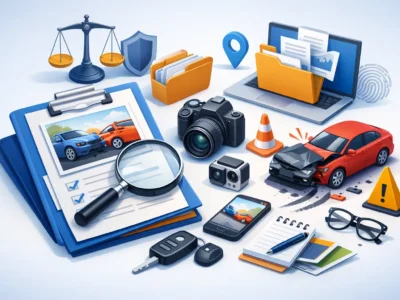
If you are physically able and it is safe, start at the scene. Use your phone to photograph the vehicles from multiple angles, including close damage shots and wider shots that show position on the road. Take pictures of license plates, traffic signals, skid marks, broken glass, debris, weather conditions, and any visible injuries.
Do not limit yourself to what looks dramatic. Small details often matter later. A bent wheel, deployed airbags, seat belt marks, or a blocked view at an intersection may become key evidence when liability is disputed.
Get the other driver’s name, contact information, license plate, insurance details, and vehicle description. If there are witnesses, ask for their names and phone numbers. Do not rely on the officer or insurer to track them down later. People move, forget, and become hard to reach.
If you can, make a short voice memo or written note while the events are fresh. Record the time, location, direction each vehicle was traveling, what you saw just before impact, and anything the other driver said. Admissions like “I didn’t see you” or “I was looking down” may matter, but memory fades quickly.
Protect the vehicle before it is altered
One of the biggest mistakes after a serious crash is letting the vehicle disappear before it is documented. Insurance companies may total a car and move quickly toward salvage. Repair shops may start work before anyone has fully photographed or inspected the damage. That can destroy valuable proof.
If fault is disputed or injuries are significant, preserve the vehicle in its post-crash condition as long as possible. Tell the insurer and storage facility in writing that the vehicle is evidence and should not be destroyed, repaired, or released without notice. This is especially important in crashes involving airbag failure, brake issues, steering problems, commercial vehicles, or disputed impact severity.
It depends on the case. In a straightforward property damage claim, detailed photos may be enough. In a major injury or wrongful death case, a full inspection by the right expert may be necessary. That decision should be made early, not after the vehicle is gone.
Medical evidence can make or break the claim
People often think of evidence as photos and witness names. In injury cases, medical proof is just as important. Go to the doctor promptly. If you delay treatment, the defense may argue you were not really hurt or that something else caused your condition.
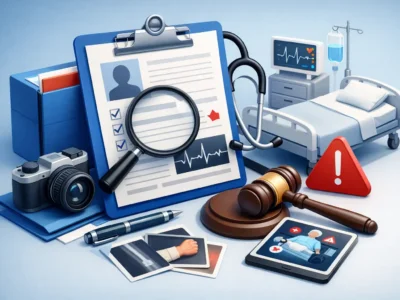
Keep every record connected to treatment. That includes emergency room paperwork, imaging reports, prescriptions, follow-up visits, physical therapy records, discharge instructions, and medical bills. Save receipts for medications, braces, crutches, and mileage to appointments if those costs are related to your injuries.
Be accurate with your providers. Describe your symptoms clearly and consistently. If your pain worsens over time, say so. If you hit your head, felt dizzy, or developed numbness later, report it. Medical charts often become central evidence, and gaps or inconsistencies will be used against you.
Do not hand the defense your weak spots
Preserving evidence also means avoiding preventable damage to your case. Do not post about the wreck, your injuries, or your activities on social media. A single photo taken out of context can be used to argue you are exaggerating.
Do not throw away damaged personal items. Torn clothing, broken helmets, child car seats, eyeglasses, or blood-stained items may help show force of impact or injury. Keep them in a safe place.
Be careful with recorded statements. Insurance adjusters often ask for one early, before the medical picture is clear and before you understand the legal issues. You may think you are helping by being cooperative. In reality, rushed statements can lock you into incomplete facts that get used later.
Hidden evidence is often the most valuable
Some of the strongest proof is not sitting in plain view. Nearby businesses may have surveillance cameras. Commercial trucks may have onboard video, driver logs, inspection records, GPS data, and electronic control module information. Modern vehicles can store crash-related data. Cell phone records may help show distraction. Roadway design and maintenance records can matter in certain cases.
The problem is access and preservation. Businesses often overwrite video within days. Companies may not voluntarily hand over internal records. Electronic data can be lost if no one moves quickly.
This is where early legal involvement can change the case. A lawyer can identify what evidence exists, send preservation notices, and take steps to prevent key material from being destroyed. In high-stakes litigation, courtroom readiness starts long before a trial date. It starts when evidence is still available to be secured.
When fault is disputed, details matter more
Not every crash is a clear rear-end case. Sometimes both drivers blame each other. Sometimes there is a sudden lane change, a left-turn dispute, or a question about speed, visibility, or intoxication. In those cases, preserving evidence is not just helpful. It is the difference between a weak claim and a winnable one.
Scene photos may show who had the right of way. Vehicle damage patterns may support one version of impact over another. Witness accounts may expose a false story. A delay of even a few days can narrow your options.
If the crash caused serious injuries, permanent limitations, or a death, expect a real fight. Serious cases draw serious defense efforts. The other side will examine causation, prior injuries, treatment choices, and every inconsistency they can find. You should be building your case with the same level of urgency.
What to do in the first 48 hours
If you want the practical answer to how to preserve evidence after crash incidents, focus on the first two days. Get medical attention, photograph everything, save damaged property, identify witnesses, and notify the right parties that key evidence must not be destroyed. Keep your paperwork organized in one place, whether digital or physical.
Then get legal guidance before the evidence trail cools off. Not every case needs a lawsuit, but strong cases are usually built as if they might end up in court. That mindset protects you from shortcuts, missing proof, and insurance pressure.
At Bowles Law Firm, that trial-forward approach matters because insurers evaluate risk differently when they know a case is being prepared by counsel with real courtroom and appellate experience. If you were hurt in a New Mexico crash and need to protect your claim from day one, Call Now or Request Free Case Review.
A crash can leave you shaken, in pain, and unsure what comes next. But preserving evidence is one part of the situation where fast action still gives you leverage – and leverage matters when the other side is already building its defense.