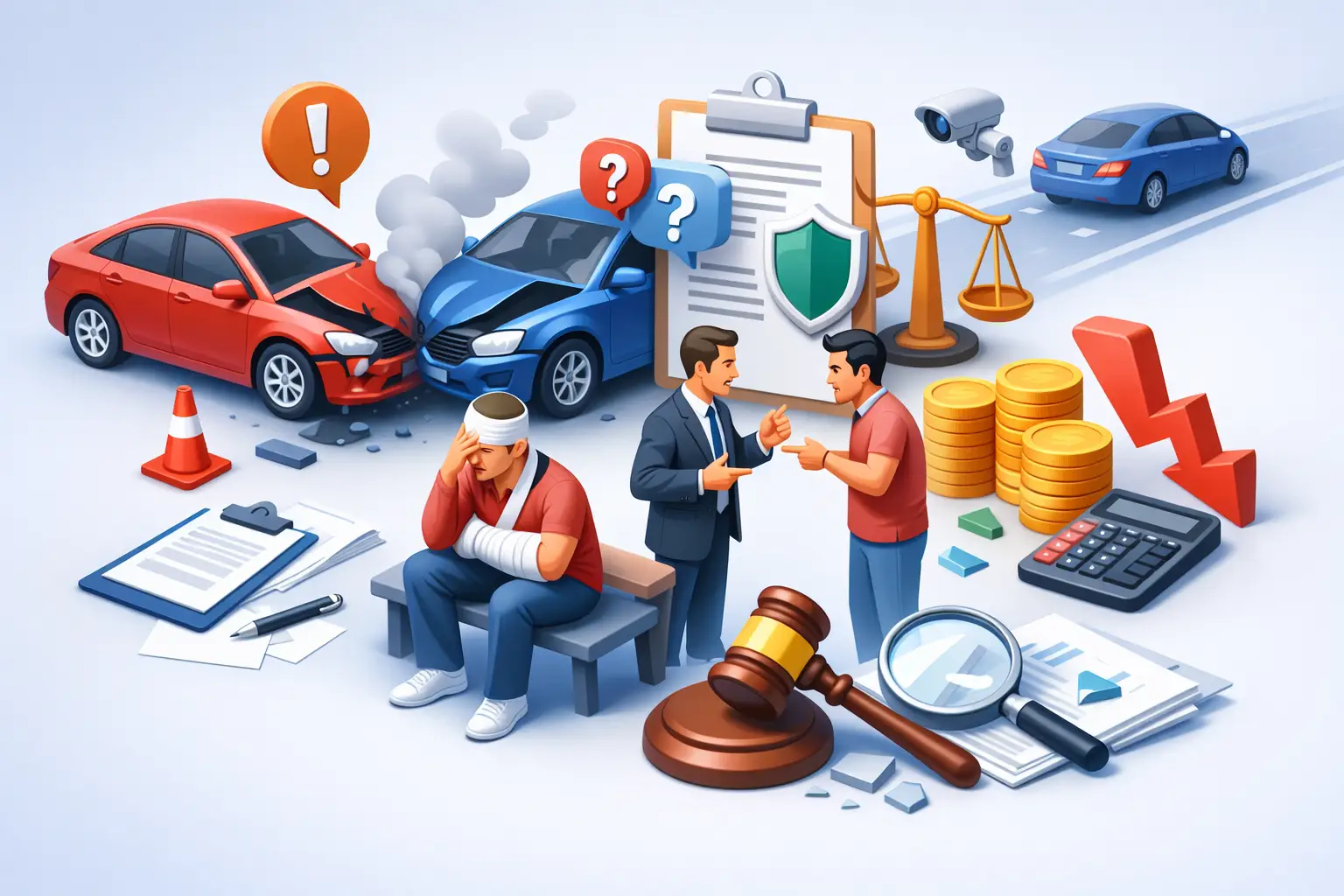
Top Mistakes After Car Accident Claims
The hours after a crash can shape everything that follows. The top mistakes after car accident cases are rarely dramatic – they are usually small decisions made while you are hurt, shaken, distracted, or trying to get back to normal too fast. Insurance companies know that. They build their strategy around delay, confusion, and gaps in proof.
If you were hit by another driver, what you do next can affect your medical care, your credibility, and the value of your claim. Some mistakes damage a case immediately. Others do not show up until weeks later, when the insurer argues your injuries were minor, unrelated, or exaggerated. That is why the right response starts early.
The top mistakes after car accident injuries
One of the biggest mistakes is not getting medical attention promptly. Many people walk away from a wreck thinking they are fine, only to wake up the next morning with neck pain, back pain, headaches, or numbness. Adrenaline masks symptoms. Soft tissue injuries, concussions, and even more serious trauma may not feel severe at the scene. If you wait too long to seek treatment, the insurance company will argue that you were not really hurt or that something else caused your condition.
Another costly mistake is failing to document the crash. If you are physically able, take photos of the vehicles, the road, skid marks, debris, traffic signals, visible injuries, and the surrounding area. Get the other driver’s information, the names of witnesses, and the report number from law enforcement. Cases are often won or lost on details that disappear fast. A vehicle gets repaired. A bruise fades. A witness stops answering calls. Evidence is strongest at the beginning.
A third mistake is giving a recorded statement to the other driver’s insurance adjuster too soon. Adjusters often sound polite and helpful. They may tell you they just want to “get your side” or move the claim along. What they are really doing is preserving statements they can use against you later. If you guess about speed, injuries, timing, or fault, those guesses can come back in a denial letter or at trial. It is usually better to speak with counsel before giving a recorded statement.
Why early choices matter so much
Personal injury claims are built on proof, not assumptions. You may know the other driver caused the wreck, but knowing it and proving it are different things. Every delay creates room for dispute. If you do not seek treatment, there is a medical gap. If you do not photograph the scene, there is an evidentiary gap. If you post online that you are “doing great,” there is a credibility gap.
That does not mean every case is ruined by one bad decision. Strong cases can survive mistakes. But each mistake gives the defense another argument, and insurers are in the business of paying less, not more. In serious injury claims, that can mean the difference between a fair recovery and a lowball offer that does not cover future treatment, lost income, or long-term pain.
Mistakes that hurt your case without you realizing it
Saying “I’m fine” at the scene
People say this out of habit. They want to be polite, calm down the situation, or avoid making a scene in traffic. But those words can end up in a police report, an adjuster’s file, or a witness statement. If you are unsure how you feel, say that. You do not need to diagnose yourself on the roadside.
Skipping follow-up treatment
Starting treatment is important, but so is continuing it. If an ER doctor tells you to follow up with your physician, physical therapy, or a specialist, do it. Gaps in care are one of the first things insurance defense lawyers look for. They will argue you got better quickly or that your pain could not have been that serious if you stopped treating.
There are real-life exceptions. Maybe you could not get an appointment right away, lacked transportation, or were worried about cost. Those facts matter and can often be explained. But silence hurts. Consistent treatment and clear records usually make for a stronger case.
Repairing the car before preserving evidence
In some crashes, especially disputed ones, vehicle damage tells an important story about speed, impact angle, and force. If liability is contested or injuries are significant, photos alone may not be enough. Before major repairs or disposal, it can be wise to speak with an attorney about preserving the vehicle and related evidence.
Posting on social media
This mistake is common because it feels harmless. A photo from dinner, a family event, or a weekend outing may look normal to you. To an insurance company, it can become “proof” that you were not injured. Social media strips away context. You may have gone out for one hour and spent the next two days in pain, but the defense will not post that part for you.
Financial mistakes after a crash
Some people accept the first settlement offer because bills are coming in and they need relief fast. That is understandable, but early offers are often made before the full medical picture is clear. Once a release is signed, the case is typically over. If symptoms get worse, treatment expands, or surgery becomes necessary later, you generally cannot go back and ask for more.
Another mistake is not tracking losses. Keep records of medical bills, prescriptions, mileage to appointments, missed work, and out-of-pocket expenses. If your injuries affect your ability to do your job, document that too. Damages are not just about the collision itself. They are about what the collision cost you.
Health insurance, medical payments coverage, and other sources of payment can complicate the picture. The right approach depends on the facts, the policy language, and the seriousness of the injuries. That is another reason quick legal advice can matter.
The top mistakes after car accident insurance calls
Insurance conversations feel informal, but they are not. The adjuster is evaluating risk, looking for inconsistencies, and measuring how little the company can pay to close the file. If you minimize symptoms, speculate about fault, or agree to broad medical authorizations, you can create problems that are hard to undo.
Be especially careful with blanket requests for your entire medical history. In some cases, limited records related to the injury may be appropriate. In many cases, broad authorizations let the insurer search for old complaints and argue your current pain existed before the wreck. Prior conditions do not necessarily defeat a claim, but they can become a battleground. Precision matters.
When waiting becomes the worst mistake
Many injured drivers wait too long to talk to a lawyer because they think the case is straightforward. Sometimes it is. Sometimes the other driver is clearly at fault and the insurer behaves reasonably. But when injuries are serious, liability is disputed, or the company starts delaying, every week matters.
Witness memories fade. Surveillance footage disappears. Phone records, vehicle data, and scene evidence may be lost. In New Mexico, legal deadlines also matter. If a claim is not investigated and filed on time, your rights can be severely limited or lost altogether. Waiting rarely helps an injured person build leverage.
This is especially true in higher-value cases involving surgery, permanent injury, wrongful death, commercial vehicles, or uninsured issues. Those are not claims to handle casually. They require disciplined investigation and litigation strategy from the start.
What to do instead
Get medical care promptly and follow through. Report the crash accurately. Preserve photos, names, records, and receipts. Be careful what you say to insurers and online. Do not assume the first offer is fair just because it arrives quickly.
If your injuries are significant or the facts are already being challenged, speak with a lawyer before the insurance company defines the case for you. A trial-ready attorney looks at more than paperwork. They look at proof, pressure points, and how the case would stand up if the insurer refuses to pay fairly.
Bowles Law Firm handles serious injury cases with that standard in mind – thorough preparation, direct attorney involvement, and a courtroom-first approach when needed. If you were hurt in a crash and need clear answers now, call now or request a free case review.
After a car accident, the right move is not to be tough or patient or trusting. It is to protect your health, protect the evidence, and make sure no one talks you out of the value of your case before the facts are fully known.