
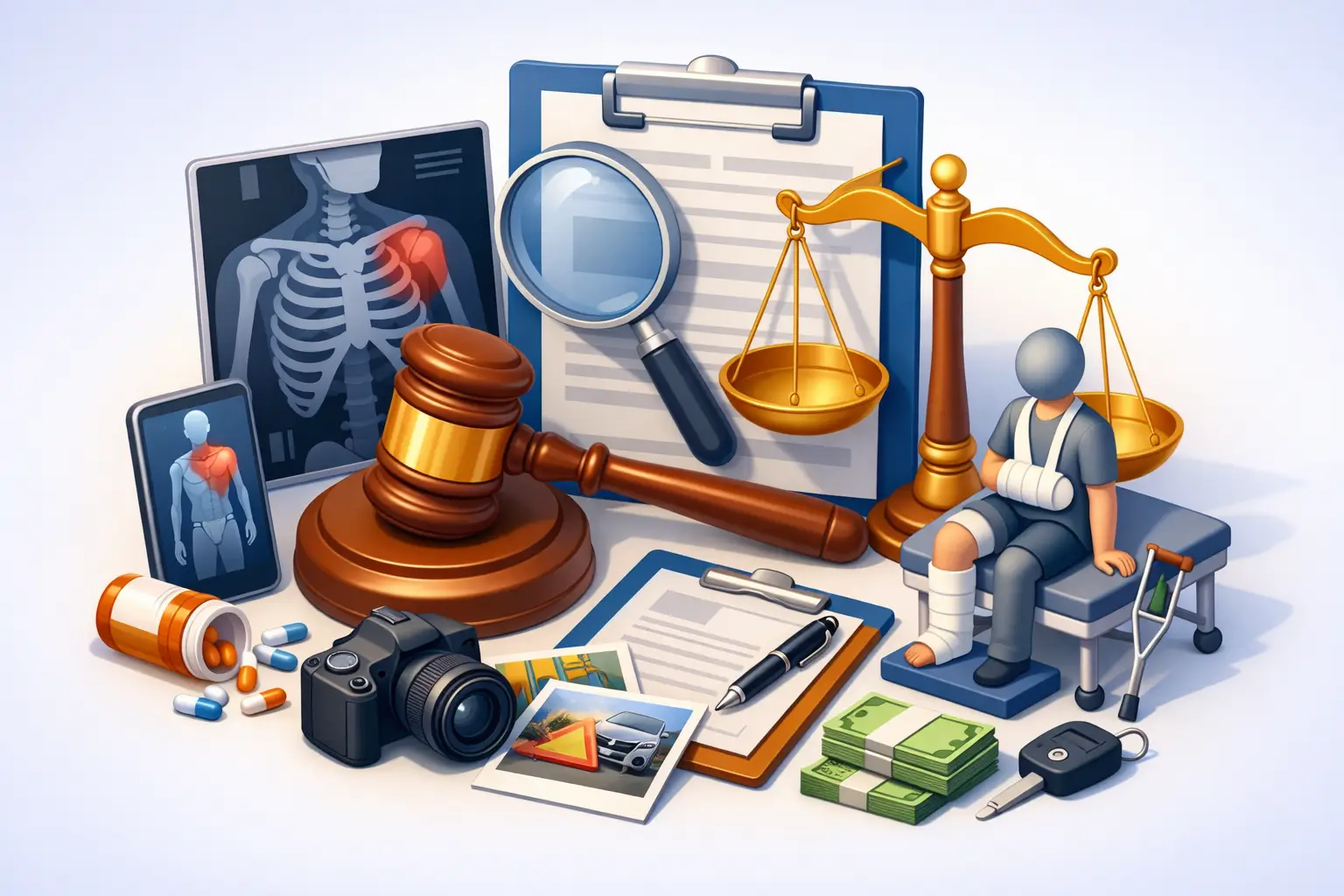
Best Evidence for Injury Lawsuit Claims
Right after a crash, a fall, or a serious medical mistake, people usually ask the same question: what is the best evidence for injury lawsuit success? The answer is not one dramatic piece of proof. Strong injury cases are built from a chain of evidence that shows exactly what happened, who caused it, and how the injury changed your health, work, and daily life.
That matters because insurance companies do not pay based on sympathy. They pay based on proof. If your case ends up in court, the standard gets even tougher. A judge or jury will want clear, credible evidence that holds up under pressure.
What counts as the best evidence for injury lawsuit cases?
The best evidence for injury lawsuit claims usually falls into three categories: liability evidence, medical evidence, and damages evidence. Liability evidence shows who caused the harm. Medical evidence connects the event to your injuries. Damages evidence proves what the injury has cost you financially and personally.
A case is strongest when those three categories line up without major gaps. For example, a rear-end collision report may show fault, emergency room records may show a neck injury right after the crash, and payroll records may show missed income. That combination is hard to dismiss.
On the other hand, even a serious injury can become harder to prove if there is a long delay in treatment, missing records, or inconsistent statements. A good case is not just about being hurt. It is about being able to prove the story from start to finish.
The evidence that carries the most weight
Medical records created soon after the injury
Prompt medical treatment is often the backbone of an injury case. Emergency room notes, ambulance reports, urgent care records, imaging results, specialist evaluations, surgical records, and physical therapy notes can all help show that the injury was real and serious.
Timing matters. If you seek care right away, it is easier to argue that the accident caused the condition. If you wait days or weeks, the defense may argue that something else caused it or that the injury was not severe.
That does not mean every delay destroys a case. Some people wait because they hope pain will go away, cannot get transportation, or do not realize the full extent of the injury immediately. But delays do create arguments the other side will use.
Photos and video from the scene
Pictures taken right after the event can be powerful because they capture conditions before anything changes. In a car crash case, photos of vehicle damage, skid marks, road conditions, and visible injuries can help establish force, location, and impact. In a slip and fall case, images of a wet floor, broken step, poor lighting, or missing warning signs may become central evidence.
Video can be even better. Surveillance footage, dashcam clips, or phone recordings often settle disputes that would otherwise turn into one person’s word against another’s. But this evidence can disappear quickly. Businesses overwrite video. Drivers delete footage. Phones get replaced.
Witness statements
Independent witnesses can make a major difference, especially when fault is disputed. A neutral third party who saw the crash, dangerous condition, or aftermath may carry more weight than either side.
The key is getting witness information early. Names, phone numbers, and short written or recorded statements can preserve details while memories are fresh. Weeks later, people forget angles, speeds, timing, and what was said.
Official reports
Police crash reports, incident reports, OSHA-related records in some injury contexts, and other official documentation can support your version of events. These reports are not always the final word, and they can contain errors, but they often provide a useful starting point.
If a report identifies the other party, notes statements made at the scene, describes property damage, or records visible injury, that can strengthen your claim. If a report is wrong, it should be addressed early before the mistake shapes the rest of the case.
Medical proof is not just diagnosis – it is causation
Many injury claims turn on causation. That means proving not only that you are hurt, but that this event caused the injury or made an existing condition worse.
This is where detailed medical documentation becomes critical. A doctor’s note that explains mechanism of injury, symptoms, test results, treatment recommendations, restrictions, and prognosis can do far more than a chart entry that simply says pain.
Preexisting conditions are common, especially in adults. A bad back, old knee injury, or prior neck pain does not automatically defeat a claim. But it does mean the evidence needs to show what changed after the incident. New symptoms, increased pain, worsening imaging, and changes in physical function may all matter.
In more serious cases, expert medical testimony may be necessary. That is especially true when the injury is permanent, the future treatment is expensive, or the defense claims the condition existed before the event.
The evidence people forget to gather
Some of the most valuable proof is not dramatic. It is consistent, boring, and difficult to argue with.
Wage loss and work records
If you missed work, lost overtime, used sick leave, changed jobs, or can no longer perform the same duties, records from your employer can help prove economic loss. Tax returns, pay stubs, attendance records, disability paperwork, and written work restrictions all matter.
If you are self-employed, proof may come from invoices, contracts, business records, and testimony about lost opportunities. These claims can be proven, but they usually require more detail.
A pain journal
A simple written journal can help document how the injury affected your sleep, mobility, stress, family life, and ability to handle routine tasks. Juries understand medical bills, but they also need to understand what daily life looks like after the injury.
The journal should be honest and specific. Short entries about missed events, pain flare-ups, medication side effects, and physical limitations are more credible than exaggerated claims.
Property damage and physical objects
Damaged vehicles, broken safety gear, torn clothing, bloodied items, and defective products can all become important. Sometimes the defense tries to inspect these items. Sometimes they become exhibits at trial. Throwing them away too early can hurt a case.
What can weaken even a valid injury claim?
Strong cases can still lose value when the evidence is inconsistent. Social media posts are a common problem. If someone claims disabling pain but posts photos that suggest intense physical activity, the defense will use that hard. Context may exist, but bad optics can be costly.
Gaps in treatment can also hurt. If you stop care without explanation, insurers may argue you recovered or were never badly injured. The same goes for failing to follow medical advice. There may be good reasons, including cost or side effects, but those reasons should be documented.
Recorded statements to insurance adjusters create another risk. People often try to be polite, minimize symptoms, or guess at facts they do not yet know. Those statements can be replayed later. Precision matters from day one.
How to protect evidence before it disappears
If you think you may have a claim, act early. Get medical care. Take photos. Save receipts and discharge papers. Keep damaged items. Write down what happened while your memory is fresh. Identify witnesses. Avoid posting about the incident online.
Just as important, talk to a trial-ready lawyer before key evidence is lost. In serious injury litigation, preserving video, electronic data, maintenance records, black box information, and internal company documents can require immediate legal action. Waiting too long can mean the evidence is gone before the case begins.
This is where courtroom experience matters. Insurance carriers know the difference between a lawyer preparing a file for settlement and one preparing a case that can be tried. Bowles Law Firm approaches injury cases with that trial-first mindset, because evidence should be built for scrutiny, not just negotiation.
When the best evidence depends on the case type
Not every injury lawsuit is proven the same way. In a car accident case, black box data, crash reports, and impact photos may take center stage. In a medical negligence case, the most important evidence may be charting, expert review, and proof that a provider violated the accepted standard of care. In a premises liability case, maintenance logs, inspection records, and surveillance footage may matter most.
That is why cookie-cutter advice only goes so far. The best evidence depends on how the injury happened, how severe it is, whether liability is contested, and whether long-term damages are involved.
If you are dealing with a serious injury, do not assume the truth will speak for itself. Evidence wins cases. The right proof, gathered early and presented the right way, can change the outcome when compensation, accountability, and your future are on the line. Call Now or Request Free Case Review if you need a direct assessment of what evidence can make your case stronger.