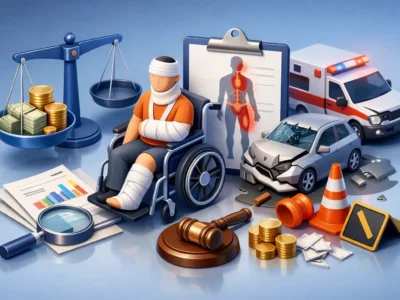

How to Value Injury Damages the Right Way
A low settlement offer often starts with one problem: the insurance company is counting bills, while you are living the damage. That gap is exactly why people ask how to value injury damages. The real answer is not a quick formula. It is a disciplined case analysis built on evidence, timing, and a clear understanding of what the injury has actually cost you and what it will continue to cost.
If you are dealing with a car crash, a serious fall, or medical negligence, the stakes are higher than many people realize. Once you accept a settlement, you usually do not get a second chance. If the case is undervalued early, you can end up paying for future consequences out of your own pocket.
How to value injury damages in a real case
Valuing an injury claim starts with separating damages into categories. Some losses are straightforward and backed by paper records. Others are very real but harder to measure. A strong case accounts for both.
Economic damages are the direct financial losses tied to the injury. These usually include emergency care, hospital bills, surgery, follow-up treatment, prescription costs, physical therapy, medical equipment, and lost wages. If the injury affects your ability to return to the same kind of work, the claim may also include loss of future earning capacity.
Non-economic damages are different. They cover harm that does not show up neatly on an invoice, such as pain, emotional distress, physical impairment, disfigurement, and loss of enjoyment of life. In a serious injury case, these damages can be substantial. They are also where insurance companies often push hardest to minimize what happened.
In some cases, there may be additional categories. If property was damaged in a crash, that may be part of the claim. In a wrongful death matter, the losses look different and may include funeral expenses and the harm suffered by surviving family members. The point is simple: valuation is fact-specific. Anyone promising a universal formula is selling simplicity where none exists.
Start with medical proof, not guesswork
The foundation of injury valuation is medical evidence. That means more than collecting a stack of bills. It means showing what happened, what treatment was necessary, how long recovery took, whether the condition is permanent, and what care will be needed in the future.
This is where weak cases often lose value. A person knows they are in pain, but the records may not fully explain the severity of the injury. Maybe they missed follow-up care because they could not afford it. Maybe the chart is vague. Maybe there is a gap in treatment that the insurer will use to argue the injury was not serious.
Good valuation requires connecting the dots. Emergency room records, imaging, specialist opinions, operative reports, physical therapy notes, and physician restrictions all matter. In more serious cases, expert input may be necessary to explain future treatment needs, permanent limitations, or long-term complications.
That is especially true when the injury is not expected to fully heal. A back injury, traumatic brain injury, surgical error, or loss of function can affect the rest of a person’s life. If those future consequences are not documented and supported, they are easier for the defense to ignore.
Lost income is not just missed paychecks
Many people assume lost wages only means time missed from work right after the accident. Sometimes it does. But a proper damage analysis asks a bigger question: has this injury changed your ability to earn a living?
If you used to work overtime, do physical labor, travel for work, or qualify for promotions based on stamina and mobility, an injury can reduce future earnings in ways that do not show up in the first few weeks. Self-employed workers often face another problem. Their income may fluctuate, which gives the insurer room to argue about what was really lost.
This is why employment records, tax returns, disability slips, and testimony from employers can become important. In larger cases, economists or vocational experts may be needed to explain how the injury affects long-term earning capacity. That kind of analysis can make a major difference in settlement value.
Pain and suffering is real, but it has to be proved
People often hear about pain and suffering as if it is a vague add-on. It is not. In many serious injury cases, it is one of the largest parts of the claim. But it has to be presented in a way that is credible and specific.
A strong claim shows how the injury changed daily life. Can you sleep through the night? Can you lift your child? Can you drive without pain, work a full shift, exercise, concentrate, or enjoy the routine parts of life you took for granted before the injury? Those details matter because they show the human cost of the harm.
There is no fixed chart that tells you what pain is worth. Insurance companies may use internal formulas or multipliers, but those tools are designed for claim handling, not for full justice. Real case value depends on the severity of the injury, the length of recovery, the credibility of the injured person, the consistency of the medical records, and whether a jury would likely view the harm as significant.
That last point matters. Cases are valued in the shadow of trial. If the other side believes your lawyer is prepared to prove damages in court, the number often changes.
The facts of liability can raise or lower value
Even serious injuries do not exist in a vacuum. Claim value is affected by who caused the harm and how clearly fault can be proved.
If liability is strong, the defense has fewer ways to reduce exposure. If fault is disputed, or if the injured person may share some responsibility, settlement value can drop. The same is true when there are preexisting conditions. A prior injury does not bar recovery, but it does create an argument the defense will use. The response has to be precise: what was the person’s condition before, what changed after, and what evidence proves that difference?
This is one reason experienced litigation counsel matters. Damages are not just numbers. They are part of a larger case story, and every weak point in that story gives the insurer leverage.
Why early settlement offers are often low
Insurance companies usually try to value claims before the full picture is known. That works in their favor. Right after an injury, treatment may still be ongoing, future complications may be unclear, and the injured person may be under financial pressure to take quick money.
A fast offer is not always a fair offer. Sometimes it reflects little more than current medical bills plus a modest amount for inconvenience. That may miss future care, lost earning power, permanent impairment, and the full scope of pain and suffering.
This does not mean every case should be dragged out. It means valuation should happen at the right time. In some cases, waiting until the medical condition stabilizes allows a far more accurate assessment. In others, early investigation is critical because evidence can disappear. Strategy depends on the facts.
How lawyers build a stronger damages case
A trial-ready damages presentation is detailed and deliberate. It does not rely on general statements that someone is hurting. It uses records, testimony, expert opinions, photographs, wage documentation, and day-to-day evidence that shows how life changed after the injury.
That preparation also sends a message. When a law firm is known for serious courtroom work, the defense has to evaluate the risk differently. Bowles Law Firm approaches injury litigation with that reality in mind. Cases with major damages require more than paperwork. They require proof that can hold up under pressure in settlement negotiations or before a jury.
For injured people, that means one practical step above all others: do not guess at value based on what an adjuster says or what someone else got in a different case. Injury claims turn on medical facts, legal proof, and the ability to present the losses forcefully.
A realistic answer to how to value injury damages
If you want a realistic answer to how to value injury damages, start here: add up every financial loss, document every future consequence, and do not treat pain and impairment as secondary issues. Then pressure-test the case the way the defense will. Where are the gaps? What needs stronger proof? How would this look to a jury?
That process is not glamorous, but it is how serious injury cases are valued correctly. The right number comes from evidence, not hope, and from preparation, not assumptions.
If you are facing medical bills, time away from work, or a life that does not look the same after an injury, get a direct case assessment before signing anything. A careful review now can protect the value of your claim later. Call now or request a free case review if you need a clear, hard-nosed evaluation of what your case may actually be worth.