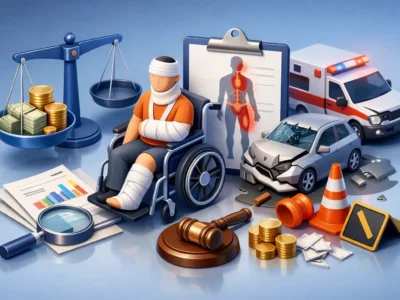

How to Build a Serious Injury Case
A serious injury case is usually won or lost long before trial. The first photos, the first medical records, the first statement to an insurance adjuster – those early moments shape what the defense can argue later. If you want to know how to build a serious injury case, start here: act quickly, document everything, and treat your claim like it may one day be presented to a jury.
Insurance companies do not evaluate catastrophic injuries based on sympathy alone. They look for gaps, inconsistencies, delay in treatment, weak proof of fault, and anything they can use to reduce value. A strong case answers those attacks before they gain traction.
How to Build a Serious Injury Case From Day One
The foundation of a serious injury claim is evidence, not assumptions. That means preserving proof of how the incident happened, what injuries were caused, and how those injuries changed your life.
If you are physically able, gather scene evidence immediately. Photos of vehicle damage, unsafe property conditions, visible injuries, road markings, weather conditions, or equipment involved can matter far more than people realize. Witness names and contact information also matter. Memories fade fast, and witnesses become harder to locate with time.
Medical treatment is just as critical. Serious injuries need prompt, consistent care, not only for your health but for your case. When there is a long delay before treatment, the defense may argue that your condition was minor, unrelated, or caused by something else. Follow through with emergency care, specialist referrals, imaging, rehabilitation, and any other treatment your doctors recommend.
Just as important, be careful what you say. A casual comment like “I’m fine” at the scene or a recorded statement to an insurer can be taken out of context later. You do not need to exaggerate your injuries, but you do need to be precise and cautious.
Liability Must Be Proven, Not Assumed
Many injured people focus only on the severity of the harm. That is understandable, but damages alone do not make a winning claim. You still have to prove liability.
In a car crash case, that may involve police reports, crash reconstruction, black box data, surveillance footage, eyewitness testimony, phone records, or proof of speeding, impairment, or distracted driving. In a premises case, it may turn on maintenance logs, incident reports, photographs, prior complaints, and whether the owner knew or should have known about a dangerous condition. In a medical negligence case, the issue is often more complex, requiring expert review of records, the standard of care, and whether the provider’s mistake caused the injury.
This is where many valid claims weaken. People assume fault is obvious when it may still be disputed. The other side may argue comparative fault, preexisting conditions, or an unavoidable accident. Building a serious injury case means gathering enough proof to withstand those arguments, not just repeating your version of events.
The strongest cases are built for challenge
A serious claim should be prepared as if the defense will fight every element. That includes fault, causation, damages, and future losses. When a case is built with trial in mind, evidence is collected more carefully, experts are engaged earlier, and weak points are identified before the other side exploits them.
That approach often changes settlement value. Insurers pay closer attention when they know the case has been prepared by a lawyer who is ready to take it beyond negotiations.
Medical Records Tell the Story – Or Leave Gaps
Your medical file is one of the most important parts of your case. It documents the mechanism of injury, your symptoms, diagnostic findings, treatment course, work restrictions, pain complaints, and long-term prognosis. It can also create problems if it is incomplete or inconsistent.
For example, if your records mention neck pain at one visit but not the next three, the defense may argue the injury resolved quickly. If you miss appointments, stop treatment, or ignore physician instructions, the insurer may claim you made your own condition worse. That does not mean every missed visit destroys a case. Life happens. But patterns matter.
Be honest with your doctors. Describe all symptoms clearly. Report limitations in daily activities, sleep disruption, pain flare-ups, and emotional effects when they are real. Do not minimize your condition out of pride, and do not overstate it. Credibility is everything.
Future damages often drive serious case value
In catastrophic injury claims, the largest losses are not always the first hospital bills. Future surgeries, ongoing therapy, reduced earning capacity, permanent disability, home modifications, and long-term pain can drive the value of the case.
Those damages usually require more than your own testimony. Treating physicians, specialists, life care planners, economists, and vocational experts may be needed depending on the injury. A broken bone that heals cleanly is not valued the same way as a traumatic brain injury, spinal damage, amputation, severe burns, or a permanent impairment that affects work and independence.
Your Documentation Matters More Than You Think
A serious injury changes routine life in ways medical records do not fully capture. That is why personal documentation can help support damages.
Keep a simple journal. Note your pain levels, mobility problems, missed work, medical appointments, medication side effects, and activities you can no longer do. If you cannot lift your child, sleep through the night, drive comfortably, return to your trade, or manage basic household tasks, that matters. Jurors and adjusters need a concrete picture of loss.
Save out-of-pocket receipts, wage records, communications with insurers, and any correspondence about time missed from work. If family members are providing care, their observations may also become relevant. The goal is not to dramatize. The goal is to document reality.
Mistakes That Can Damage a Serious Injury Claim
Some case damage happens early and is hard to fix later. Social media is a common problem. A single photo, comment, or tagged post can be misused to suggest you are less injured than claimed. Even harmless content can be taken out of context.
Another problem is settling too quickly. Serious injuries can take months to diagnose fully, especially with neurological injuries, orthopedic complications, or medical issues that worsen over time. If you settle before you understand the long-term picture, you may give up compensation you cannot recover later.
There is also the issue of waiting too long to get legal help. Evidence disappears. Witnesses become unavailable. Surveillance footage gets erased. In New Mexico, deadlines apply, and some cases involve shorter notice requirements or more technical procedural issues. Delay rarely helps an injured person.
Why Legal Strategy Changes the Strength of the Case
Knowing how to build a serious injury case is not just about collecting records. It is about building pressure points. Which witnesses matter most? What experts are necessary? Is there a punitive damages angle? Is the defense likely to dispute causation, future care, or liability itself? Those questions shape the value of the case.
A lawyer with real trial experience approaches the file differently than someone planning to settle at the first reasonable offer. Serious injury defendants and insurers often study who is across from them. If they believe the case will be pushed, developed, and tried well, that affects negotiation posture.
That is especially true in high-damages cases involving permanent injury, wrongful death exposure, or disputed liability. A disciplined litigation strategy can make the difference between a claim that is dismissed as ordinary and one that is treated as credible trial risk.
At Bowles Law Firm, that trial-forward approach matters because serious cases require more than paperwork. They require direct attorney involvement, careful case development, and preparation that stands up in court.
How to Build a Serious Injury Case When the Facts Are Not Perfect
Not every strong case starts clean. Sometimes there was a preexisting condition. Sometimes there are limited witnesses. Sometimes the injured person said the wrong thing at the scene or did not realize how bad the injury was for several days.
That does not automatically end the claim. It means the case needs a more careful presentation. A preexisting condition may still have been aggravated. A delayed diagnosis may still be tied to the event. Shared fault may reduce recovery rather than eliminate it. The key is to address weaknesses directly instead of hoping they disappear.
An experienced trial lawyer will look at what can be proven, what needs expert support, and what risks need to be managed early. Serious cases are rarely perfect. They are won by preparation, credibility, and pressure-tested evidence.
If you or a family member suffered a major injury and the stakes are high, do not let the insurance company define the case before you do. Get the records, protect the evidence, and get legal advice early. A strong claim is built piece by piece, with the expectation that every fact may be challenged. That is how serious cases are positioned to recover serious compensation.
If you need answers about your rights after a catastrophic injury, Call Now or Request a Free Case Review. The sooner the case is built correctly, the harder it is for the other side to tear it down.