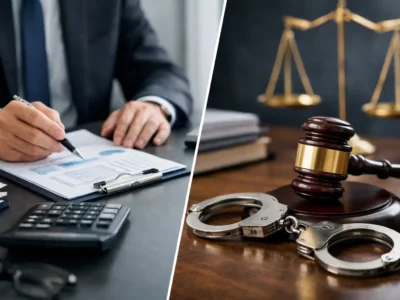

Criminal Defense When the Stakes Are High
A criminal accusation can move fast: an arrest, a call from an investigator, a search warrant, or a notice to appear in court. The government may already be gathering records, interviewing witnesses, and shaping its version of events. Criminal defense is the work of protecting your rights, testing that evidence, and forcing the prosecution to prove every element of its case.
The consequences are not limited to a courtroom sentence. A conviction or guilty plea can affect a job, professional license, reputation, driving privileges, finances, and future opportunities. The right response is not panic or guesswork. It is immediate, disciplined action with a lawyer prepared to take the case seriously from the start.
What Criminal Defense Actually Means
Criminal defense is more than appearing at an arraignment or asking a judge for leniency. A serious defense begins with the facts: what happened, what law enforcement observed, how evidence was obtained, what witnesses can truly say, and whether the state can prove the charge beyond a reasonable doubt.
That process may require reviewing police reports, body-camera footage, dispatch recordings, forensic testing, medical records, financial documents, phone data, surveillance video, and prior statements. It may also require locating witnesses the police never interviewed and identifying evidence that supports the defense rather than the accusation.
The prosecution carries the burden of proof. But that burden only matters when the defense is ready to challenge weak assumptions, unreliable identifications, unlawful searches, incomplete investigations, and evidence taken out of context. A charge is an allegation. It is not a verdict.
The First Decisions Can Shape the Case
Many people make damaging decisions before they ever speak with counsel. They try to explain themselves to officers, contact an alleged victim or witness, delete messages, post about the incident online, or assume that cooperation means they can talk their way out of the problem. Those choices can create evidence that did not exist before.
If you are under investigation or have been charged, use your right to remain silent. Be polite, but do not answer investigative questions or agree to an interview without legal advice. Do not consent to a search merely because an officer asks. Do not destroy or alter potential evidence. Preservation matters, even when a message, document, or video feels unfavorable.
You should also take every court date, release condition, and no-contact order seriously. Missing court or violating conditions can lead to a warrant, loss of release, and additional allegations. A strong defense must deal with the original accusation and avoid preventable complications.
Questions a Defense Lawyer Should Ask Early
The early review should be specific, not generic. Was there reasonable suspicion for a stop? Did officers have probable cause to arrest? Was a search supported by consent, a warrant, or a valid exception to the warrant requirement? Were statements voluntary, and were constitutional warnings required?
In a DUI case, the questions may involve the traffic stop, field sobriety testing, breath or blood collection, laboratory procedures, and video evidence. In a white-collar case, the focus may be on intent, the meaning of financial records, the reliability of government witnesses, and whether business conduct is being mischaracterized as criminal conduct.
The answer depends on the case. Not every police mistake ends a prosecution, and not every troubling fact makes conviction inevitable. The value of early analysis is knowing which facts can be challenged and which risks must be addressed directly.
A Trial-Ready Strategy Changes the Conversation
Most criminal cases do not go to trial. That does not mean trial preparation is optional. A prosecutor evaluates a case differently when defense counsel has investigated independently, filed focused motions, identified evidentiary problems, and demonstrated a willingness to try the case when necessary.
A trial-ready approach does not mean rejecting every negotiated resolution. Sometimes a carefully evaluated agreement reduces exposure and gives a client a better path forward. Other times, accepting a plea too quickly means giving up a viable defense without ever seeing the full evidence or pressing the state on its burden.
The right decision depends on the evidence, the available defenses, the potential penalties, collateral consequences, and the client’s goals. It should be made with clear advice, not pressure. Your lawyer should explain the realistic range of outcomes, including the risks of trial, rather than making promises no lawyer can honestly guarantee.
At Bowles Law Firm, the approach is built for high-consequence litigation. Jason Bowles has served as lead counsel in more than 88 trials across federal, state, and military courts, along with more than 40 appeals. That courtroom and appellate experience matters when the government’s case needs to be tested, not simply managed.
Constitutional Rights Are Tools, Not Technicalities
The Constitution places limits on government power for a reason. An unlawful search can lead to a motion to suppress evidence. An improperly obtained statement may be excluded. A flawed identification procedure can be challenged. A failure to provide required information may affect how the defense prepares for trial.
These issues are not loopholes. They are safeguards against wrongful convictions and unchecked investigative power. Still, legal motions must be grounded in the facts and the law. A lawyer should investigate first, then make strategic arguments that can withstand the judge’s scrutiny.
Defense work also extends to the evidence that is not in the government’s file. Video may contradict a report. A timestamp may undermine a witness’s account. A neutral witness may provide crucial context. A qualified expert may expose a weakness in forensic or financial evidence. Thorough preparation creates leverage and can change the course of a case.
What to Expect After Charges Are Filed
The court process can feel impersonal and confusing, particularly when your freedom and reputation are at stake. While procedures vary based on the charge and court, most cases involve an initial appearance or arraignment, decisions about release conditions, exchange of evidence, motion practice, hearings, plea discussions, and potentially trial.
Your lawyer’s role is to keep you informed about what is happening and what decisions need to be made. Direct communication matters. You deserve to understand the accusation, the evidence, the deadlines, and the consequences of each available option.
You also need to be honest with your attorney. Share the documents, communications, prior history, and unfavorable facts early. Your attorney cannot protect you from information that surfaces later without warning. Confidential legal advice works best when the client provides the full picture.
When to Call a Criminal Defense Lawyer
Call as soon as you learn you may be a target of an investigation, receive a subpoena, are contacted by law enforcement, are arrested, or receive court paperwork. Waiting can cost valuable evidence and give the other side time to define the narrative without challenge.
Prompt representation is especially important when officers want an interview, property has been seized, a search warrant was executed, or someone is asking you to provide records. What looks like a routine request may carry serious legal consequences.
If you or someone close to you is facing charges in Albuquerque or elsewhere in New Mexico, request a case review now. Bring the paperwork you have, preserve relevant records, and get clear advice before making another move. When the stakes are high, your defense should begin before the case gains momentum against you.