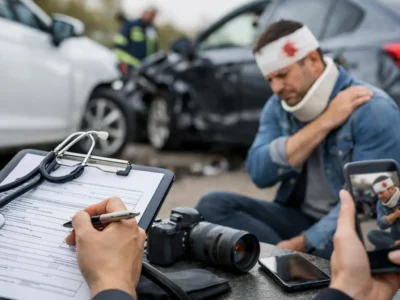

How to Document Crash Injuries the Right Way
The first hours after a wreck are messy. Your adrenaline is high, the other driver may already be changing their story, and what feels like a sore neck can turn into weeks of treatment. If you are wondering how to document crash injuries, the goal is simple – protect your health first, then preserve the proof before it disappears.
That proof matters more than most people realize. Insurance companies do not pay claims because someone says they were hurt. They pay when the medical records, photos, timelines, and witness accounts line up and show a clear story. When the documentation is weak, insurers look for gaps. When it is strong, your case starts from a position of strength.
Why documenting crash injuries matters
A crash injury case is not just about what happened at the intersection. It is about what can be proven afterward. Soft tissue injuries, concussions, back pain, and nerve symptoms often get worse after the scene is cleared. If you wait too long to seek treatment or fail to keep records, the insurer may argue the injury was minor, unrelated, or caused by something else.
Good documentation also helps your doctors. A clear account of where you were hit, what part of your body struck the vehicle, and how your symptoms changed over time can improve diagnosis and treatment. That is not just a legal point. It can directly affect your recovery.
Start at the scene if you can do it safely
If you are physically able and it is safe, begin documenting immediately. Call 911 and ask for law enforcement and medical help if anyone may be injured. A police report is not the whole case, but it is a starting point.
Take photographs from multiple angles. Get the damage to every vehicle, the entire roadway, skid marks, broken glass, traffic signs, weather conditions, deployed airbags, and any visible injuries. Do not just take one close-up shot of a dented bumper. Pull back and show context. Wide shots and detail shots work together.
If you have cuts, bruising, swelling, or seat belt marks, photograph those as well. Keep taking injury photos over the next several days. Bruises often darken later. Swelling can increase. What seems minor at the scene can look very different 48 hours later.
Talk to witnesses if possible. Get names and phone numbers. People leave quickly, and independent witnesses can make a major difference when drivers disagree.
Get medical care quickly and follow through
One of the biggest mistakes after a crash is waiting it out. People often think, “I am sore, but I will be fine by tomorrow.” Sometimes that is true. Often it is not.
If paramedics recommend evaluation, take it seriously. If you are not transported from the scene, get checked by an ER, urgent care, or your doctor as soon as possible. Tell the provider every area that hurts, even if it seems minor. Mention headaches, dizziness, numbness, back pain, shoulder pain, jaw pain, and any confusion or vision changes.
This is where how to document crash injuries becomes more than taking pictures. Your medical chart is one of the most important pieces of evidence in the case. If you tell the doctor only about neck pain but say nothing about knee pain, that missing complaint can become a problem later when the knee gets worse.
Follow the treatment plan. Go to follow-up appointments, physical therapy, imaging visits, and specialist consultations. Gaps in treatment are one of the first things insurance adjusters point to. There can be valid reasons for missed care, including cost or transportation problems, but unexplained gaps weaken a claim.
Keep every record in one place
After a crash, paperwork starts arriving fast. Ambulance bills, discharge instructions, imaging reports, prescriptions, work notes, repair estimates, and insurance letters pile up. If those records are scattered across your car, kitchen table, and email inbox, details get lost.
Create one file for everything. A physical folder works. A digital folder works too. What matters is consistency.
Keep copies of your emergency room records, primary care notes, specialist reports, physical therapy records, imaging results, and prescription receipts. Save every bill and explanation of benefits. Hold on to any written work restrictions from your doctor.
Also keep the crash-related documents that are not medical. That includes the crash report, photographs, witness information, vehicle repair estimates, tow receipts, rental car costs, and any messages from insurers.
Write down your symptoms before you forget them
Memory fades faster than people expect. A week after the wreck, you may remember your shoulder hurt. A month later, you may forget that your hand was tingling at night, your headaches started on day two, or you could not turn your neck when backing out of the driveway.
A daily injury journal can be powerful evidence when it is honest and specific. You do not need pages of dramatic language. Plain facts are better.
Write down your pain levels, where the pain is located, what activities are hard, how you are sleeping, and whether symptoms are getting better or worse. Note missed work, family activities you had to skip, and basic tasks that suddenly became difficult, like lifting groceries, bathing a child, driving, or sitting through a full shift.
Be accurate. If one day is better, say so. Exaggeration can hurt credibility. A truthful record that shows ups and downs is more believable than a journal that claims every day is a ten out of ten.
Photograph the progression of your injuries
Injury photos should not stop after the first day. Continue taking pictures as bruising develops, stitches heal, swelling changes, casts are applied, or surgical scars form. Use good lighting and include the date if your phone settings allow it.
Try to photograph the same injury from similar angles over time. That makes the progression easier to understand. If you have visible injuries to the face, arms, chest, knees, or abdomen, those images can carry weight in negotiations because they make the harm real in a way paperwork alone often does not.
Document lost income and disruption to your life
Crash injuries are not limited to medical bills. They can cost wages, job opportunities, and independence.
Ask your employer for written confirmation of missed days, reduced hours, used leave, or modified duties. If you are self-employed, keep invoices, canceled appointments, lost contracts, and prior earnings records that show what the crash cost you.
You should also keep track of out-of-pocket expenses. Mileage to appointments, medication costs, medical equipment, and home care expenses can all matter. Some losses are obvious. Others add up slowly.
Be careful what you say to insurance companies
You should report the crash, but you do not need to give a polished narrative before you understand your injuries. Early statements can become traps, especially when pain has not fully developed yet.
Stick to basic facts. Do not guess about speed, distance, or the extent of your injuries. Do not say you are “fine” if you are still being evaluated. If an adjuster asks for a recorded statement, it is fair to slow down and get legal advice first.
The same rule applies to social media. Photos of vacations, gym visits, or even a family barbecue can be taken out of context. If your claim involves serious pain or physical limitations, public posts can be used against you.
Common mistakes that hurt injury claims
Most weak cases are not weak because the injury was fake. They are weak because the proof was incomplete.
The most common problems are delaying treatment, failing to mention all symptoms, missing follow-up care, throwing away receipts, posting too much online, and assuming the insurance company will gather the evidence for you. It will not. Their job is to evaluate the claim from their side. Your job is to protect your side.
There is also a trade-off people should understand. Some injuries resolve quickly, and heavy documentation may feel excessive at first. But serious cases are not always obvious on day one. It is better to keep thorough records and not need every piece than to need them later and not have them.
When to talk to a lawyer about how to document crash injuries
If the injuries are significant, liability is disputed, or the insurer is already pushing back, get legal guidance early. The right lawyer can help preserve medical proof, organize damages, and stop avoidable mistakes before they affect the claim.
This matters even more in high-stakes cases involving surgery, permanent impairment, brain injury, spinal damage, or wrongful death. Those claims are built on detail, timing, and disciplined evidence. Trial-ready preparation changes leverage.
Bowles Law Firm handles serious injury cases with a courtroom-first mindset. If you were hurt in a crash and need clear direction on what to save, what to request, and what not to say, call now or request a free case review.
Your body will tell the story of the crash for a while. Make sure your records tell it clearly too.