
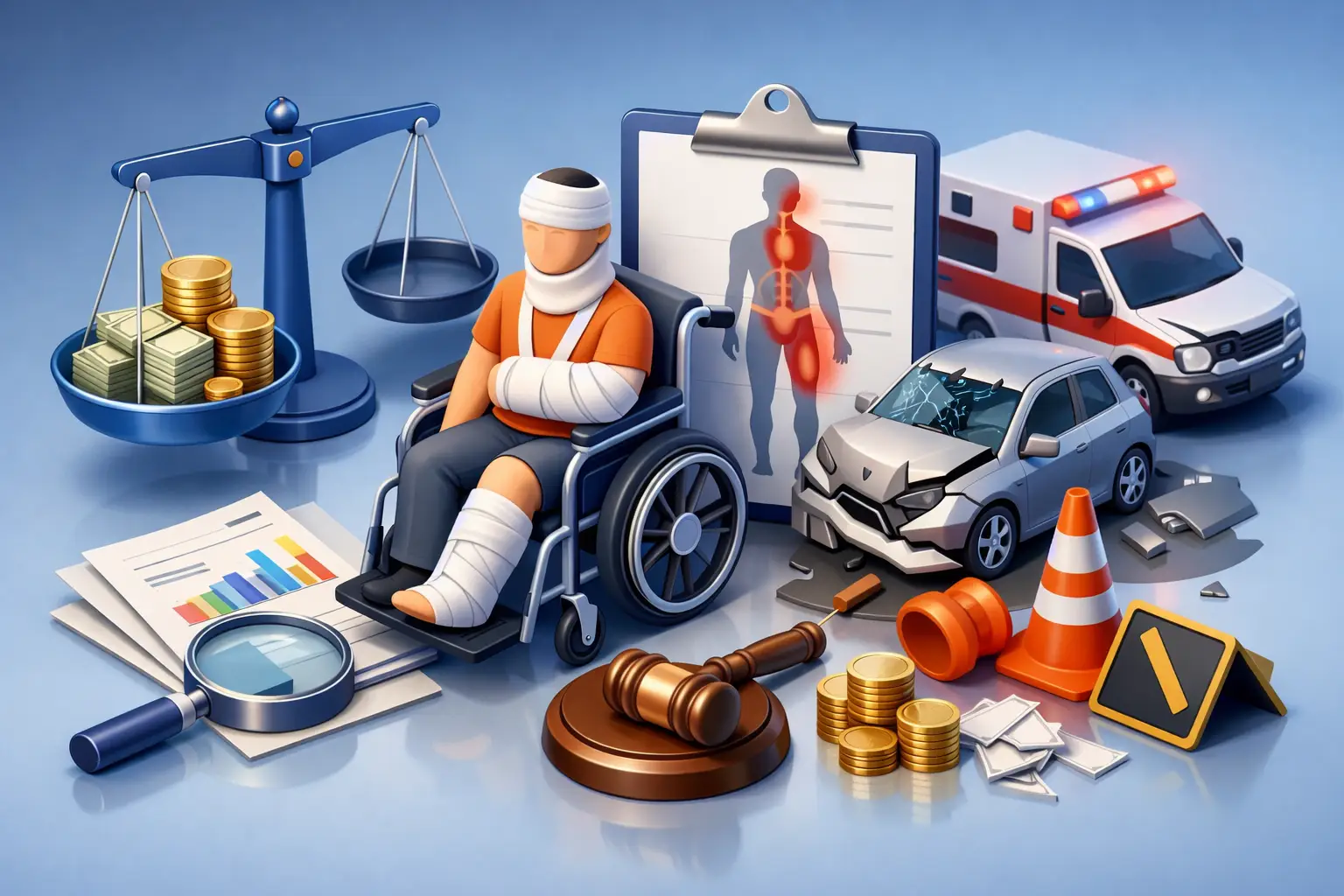
How to Value Catastrophic Injury Claims
A catastrophic injury case is not a matter of adding hospital bills and naming a number. When someone suffers a spinal cord injury, traumatic brain injury, severe burns, amputation, or permanent loss of function, the real cost reaches far beyond the first round of treatment. If you want to understand how to value catastrophic injury claims, you have to look at what the injury has taken already, what it will keep taking in the future, and what it will demand for the rest of a person’s life.
That is where serious cases separate themselves from ordinary injury claims. The numbers are higher, but the method is also more demanding. Insurance companies know that one mistake in valuation can cost millions. That is why they look for gaps, assumptions, and weak proof. A case with permanent harm has to be built for scrutiny from day one.
What makes an injury catastrophic
A catastrophic injury is one that causes long-term or permanent impairment and changes the course of a person’s life. In practical terms, that usually means the person cannot return to the same work, cannot live with the same independence, or will require ongoing medical treatment, attendant care, adaptive equipment, or major home changes.
This category often includes traumatic brain injuries, paralysis, severe orthopedic damage, injuries that require multiple surgeries, significant nerve damage, loss of limb, and severe disfigurement. The label matters because it changes how damages are calculated. A minor soft tissue claim may turn on a few months of treatment. A catastrophic case may require projections covering decades.
How to value catastrophic injury in real terms
The starting point is damages, but not just the damages that are easy to count. A full valuation usually includes past medical expenses, future medical care, lost wages, reduced earning capacity, pain and suffering, loss of enjoyment of life, and in some cases damages tied to a spouse or family relationship. In the most serious cases, every one of those categories can be substantial.
Past losses are usually the simplest part. Bills, wage records, and treatment notes create a paper trail. Future losses are where the case is won or lost. You are not guessing about future care. You are proving it with medical evidence, life care planning, vocational analysis, and economic testimony when needed.
A person with a spinal cord injury may need future surgeries, medication, mobility devices, wheelchair-accessible transportation, home modifications, and assistance with basic daily tasks. A person with a brain injury may look functional in short conversations but still be unable to work, manage finances, regulate emotions, or live safely without support. Those losses are real, but they must be documented and translated into evidence a jury or insurer cannot dismiss.
Medical expenses are only one piece
Many people assume the biggest number in a catastrophic injury case will be the hospital charges. Sometimes that is true. Often it is not. The greater financial burden may come from years of treatment after discharge.
Future care can include rehabilitation, in-home nursing, occupational therapy, counseling, pain management, prosthetics, replacement equipment, transportation assistance, and periodic reevaluation by specialists. If the injury occurred at a young age, those costs can continue for decades. If the person will need a modified home or vehicle, that gets added too.
This is why lawyers handling serious injury cases often work with treating doctors and outside experts. A case value built only on current bills is vulnerable. A case value built on a medically supported life care plan is much harder to minimize.
Lost earning capacity can outweigh lost wages
There is a difference between wages already lost and the ability to earn a living in the future. Catastrophic injuries often damage a person’s career path, not just their current paycheck.
Take a construction worker who can no longer lift, climb, or work long shifts. Or a nurse with chronic pain and restricted mobility. Or a younger professional with a brain injury whose memory and concentration no longer support complex work. In each of those cases, the loss is not limited to missed paychecks during recovery. It may include decades of reduced earnings, lost benefits, missed promotions, and early departure from the workforce.
That calculation depends on age, work history, education, job skills, likely career progression, and medical restrictions. It also depends on honesty. Some injured people can still work in some capacity. That does not mean the loss is small. It means the claim has to reflect the difference between what the person could have earned before and what remains realistically available now.
Pain, suffering, and loss of normal life matter
The law recognizes that not every major loss comes with a receipt. Catastrophic injury can mean chronic pain, humiliation, dependence on others, inability to parent in the same way, loss of intimacy, depression, anxiety, and the daily frustration of living in a body that no longer functions as it once did.
Insurance carriers often try to treat these harms as subjective and therefore negotiable. A strong case does the opposite. It shows the human consequences with detail and discipline. Medical records, testimony from family members, treating providers, day-in-the-life evidence, and the injured person’s own account can all matter.
Jurors understand permanent change when they can see it in concrete terms. They understand the father who can no longer pick up his child, the worker who cannot return to the trade he spent twenty years building, the patient whose brain injury has altered personality and independence. The valuation becomes stronger when the story is specific and supported.
Liability still drives value
Even devastating injuries do not automatically produce a high recovery. Liability matters. If fault is disputed, if multiple parties are involved, or if key evidence is missing, the settlement value may be lower than the damages alone would suggest.
That is one reason trial readiness matters in catastrophic cases. A claim with massive damages but weak liability proof invites low offers. A claim backed by thorough investigation, expert analysis, and a lawyer prepared to try the case carries more pressure. The value of a catastrophic injury claim is never just about the injury. It is also about how convincingly responsibility can be established.
In New Mexico, comparative fault can also affect recovery. If the defense argues the injured person shares part of the blame, that issue has to be taken seriously and addressed early. Ignoring liability problems does not make them disappear. It makes the valuation unrealistic.
Insurance policy limits can create hard ceilings
One of the most frustrating realities in catastrophic injury litigation is that the true value of a case and the collectible value are not always the same. If the defendant has limited insurance and few assets, there may be practical limits on recovery even in a life-changing injury case.
That does not mean the case is not worth pursuing. It means a serious lawyer looks at every possible source of recovery, including additional defendants, commercial policies, umbrella coverage, underinsured motorist coverage, and other available avenues. A proper valuation looks at damages and collectability together.
Why early low offers are usually wrong
Insurers sometimes move fast after a serious injury. That speed is not generosity. It is often a bet that the full scope of the harm is not yet clear.
In catastrophic cases, early valuation is often incomplete because doctors are still assessing prognosis, future surgeries may be unknown, and long-term limitations may not yet be fully measured. Once a case settles, the injured person generally cannot come back later and ask for more because the future turned out worse than expected.
That is why patience and preparation matter. The strongest number is usually the one that can be proved, not the one demanded before the medical picture is developed.
The right case value is built, not guessed
There is no honest online calculator for catastrophic injury value. Cases with similar diagnoses can produce very different outcomes based on age, occupation, preexisting health, family support, liability evidence, venue, witness credibility, and the quality of expert proof. Anyone who assigns a serious value too early or too casually is not doing the work.
A battle-tested lawyer approaches valuation the way a trial team approaches a verdict. The record gets built. The medicine gets understood. The future gets projected carefully. The weak points get confronted before the defense exploits them.
At Bowles Law Firm, that trial-forward approach matters because catastrophic injury cases are not paperwork exercises. They are high-stakes claims that demand direct strategy, disciplined preparation, and evidence strong enough to stand up in court. If you or a loved one is facing permanent harm, Call Now or Request Free Case Review before speaking with the insurance company on their terms.
The right value is not the fastest number on the table. It is the number that reflects the life that was changed and the proof required to defend it.