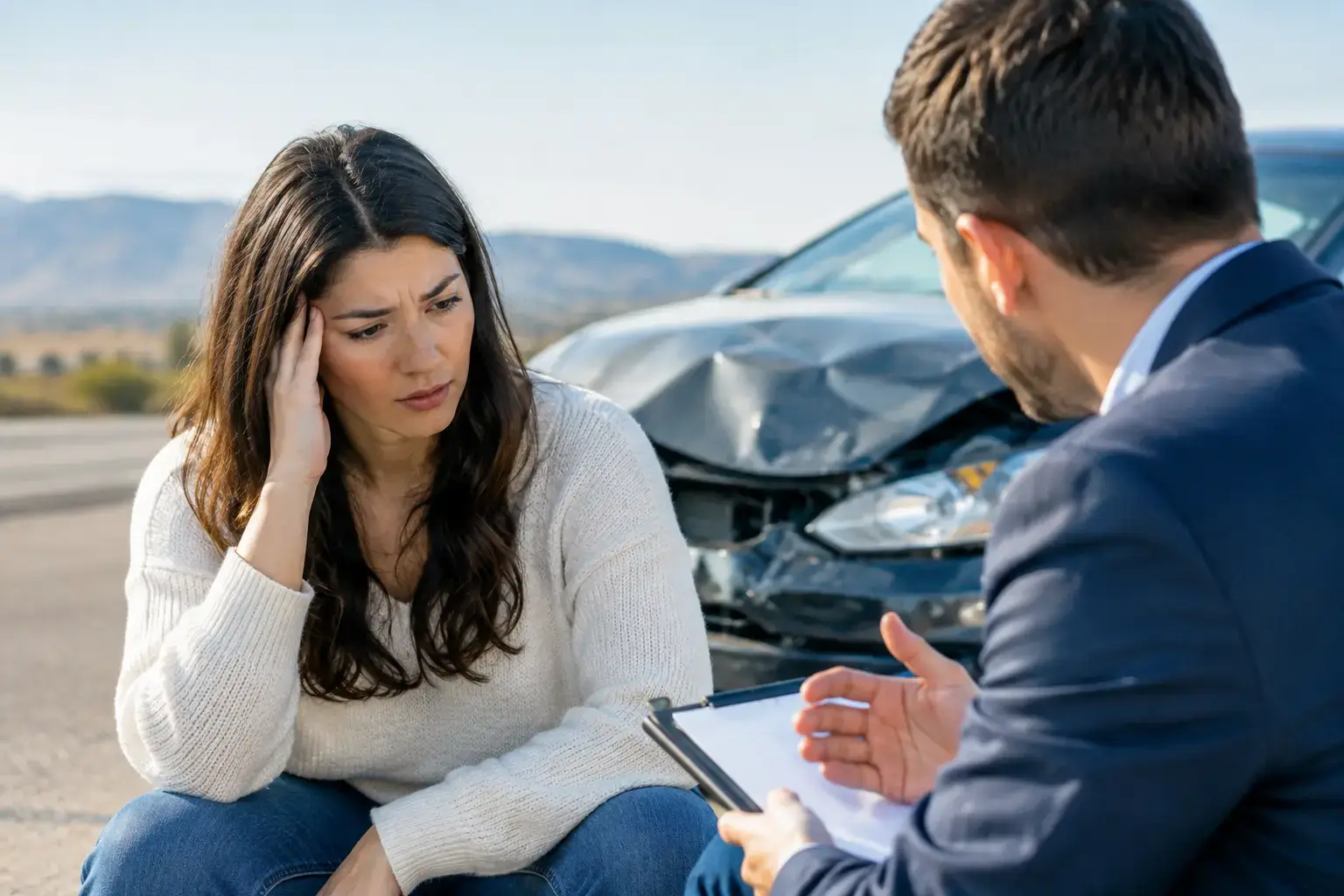
Can Passengers Sue Negligent Drivers in NM?
A passenger may leave a crash with a broken bone, a concussion, or pain that does not show up fully until days later. Then comes the uncomfortable question: can passengers sue negligent drivers when the driver was a friend, relative, coworker, or the person who offered them a ride? In New Mexico, the answer is often yes. A driver who causes a collision through careless conduct can be legally responsible for the harm suffered by a passenger.
That does not mean every crash automatically produces a successful claim. The facts, available insurance, medical proof, and filing deadlines matter. But a passenger should not assume that personal loyalty or a close relationship with the driver eliminates the right to seek compensation.
Can Passengers Sue Negligent Drivers in New Mexico?
Passengers have the same basic right as other injured people to bring a negligence claim against an at-fault driver. The claim is usually made against the driver’s auto liability insurance policy, not against the driver’s personal checking account. That distinction matters when people hesitate to act because they do not want to financially ruin someone they know.
Negligence means the driver failed to use reasonable care. Common examples include speeding, following too closely, running a red light, distracted driving, driving while impaired, making an unsafe turn, or losing control in poor weather after failing to adjust speed. If that conduct caused the wreck and the passenger was injured, the driver may owe damages.
The passenger does not have to prove that the driver intended to cause a crash. Carelessness is enough. A driver who looks down at a phone for a few seconds, drifts into another lane, and causes a collision can be liable even though the driver never meant for anyone to get hurt.
A Passenger May Have Claims Against More Than One Party
The driver of the vehicle you were riding in is not always the only responsible party. Many serious crashes involve competing accounts of what happened, and an early assumption about fault can leave money on the table.
For example, another motorist may have struck the vehicle carrying the passenger. Both drivers may share fault in a chain-reaction collision. A commercial vehicle operator, a business that owned a vehicle, or a public entity responsible for a dangerous roadway condition may also be involved, depending on the evidence.
New Mexico follows a pure comparative fault system. In practical terms, each responsible party can be assigned a percentage of fault. A passenger is often entirely blameless, but there can be exceptions. An insurer may argue that a passenger knowingly rode with an impaired driver or interfered with the driver in some way. Those arguments are fact-specific and should not be accepted at face value.
A careful investigation should examine the crash report, vehicle damage, photographs, surveillance footage, witness accounts, phone records when appropriate, and available electronic data. Fault is not decided by the first insurance adjuster who calls.
What Compensation Can an Injured Passenger Seek?
A passenger injury claim can seek compensation for losses caused by the crash. That may include medical bills already incurred and the reasonable cost of future treatment. It may also include lost income, reduced ability to work, physical pain, emotional distress, and damage to quality of life.
For a severe injury, the largest losses are often not the emergency-room bill. A traumatic brain injury, spinal injury, chronic pain condition, or orthopedic injury can change a person’s ability to earn a living, care for children, sleep, drive, or complete ordinary tasks. Those consequences need to be documented with medical records, treating-provider opinions, work records, and credible evidence of how life changed after the collision.
If a crash caused a death, surviving family members may have a wrongful death claim. New Mexico law has specific rules about who brings that claim and what damages may be recovered. These cases require prompt, disciplined action to preserve evidence and protect the family’s rights.
In cases involving drunk driving, extreme recklessness, or other especially dangerous conduct, punitive damages may also be available. Punitive damages are not automatic. They are intended to punish and deter conduct that goes beyond ordinary carelessness.
Insurance Is Often the First Battlefield
A driver may clearly be at fault yet carry only limited liability coverage. That is why identifying every possible insurance source is essential. The at-fault driver’s policy is usually the starting point, but it may not be the end of the analysis.
An injured passenger may also have uninsured or underinsured motorist coverage through their own policy or, in some circumstances, a policy in their household. This coverage can become critical when the liable driver has no insurance, fled the scene, or has limits that do not begin to cover a serious injury. The availability of coverage depends on policy language, household relationships, exclusions, limits, and the facts of the crash.
Insurance companies do not simply write a fair check because a passenger was hurt. Adjusters may question whether treatment was necessary, argue that an injury existed before the collision, minimize future care, or push for a quick settlement before the full medical picture is clear. Once a settlement release is signed, the claim is usually over, even if symptoms worsen.
Do not give a recorded statement or accept a settlement offer without understanding what you are giving up. You can report the claim and obtain needed benefits while still protecting your right to obtain legal advice.
What to Do After a Passenger Injury Crash
The first priority is medical care. Follow up if pain, dizziness, numbness, headaches, or cognitive symptoms appear after the initial shock of the collision. A gap in treatment can be used by an insurer to argue that an injury was minor or unrelated, even when that is not true.
Preserve what you can. Save photographs of injuries and the crash scene, insurance information, medical paperwork, prescription receipts, and communications with insurers. Write down what you remember while the details are fresh, including where everyone was seated, what the driver was doing before impact, weather conditions, and any statements made at the scene.
Avoid posting about the crash or your physical condition on social media. A single image or comment can be taken out of context and used to challenge a claim. It is also wise to avoid repairing or disposing of personal property that may help show the force of the collision until it has been documented.
Deadlines Can Change the Case
Most New Mexico personal injury claims have a three-year filing deadline, but relying on the general rule can be costly. Claims involving a government vehicle, a government agency, or a dangerous condition on public property can trigger short notice requirements and different filing periods. Wrongful death cases and claims involving minors can also involve rules that require individualized legal analysis.
Waiting has another cost beyond the statute of limitations. Video may be erased, witnesses become difficult to locate, vehicles are repaired or destroyed, and memories fade. The stronger case is usually the case investigated before key proof disappears.
When a Passenger Should Speak With a Trial Lawyer
A passenger should consider legal counsel quickly when injuries are significant, fault is disputed, multiple vehicles were involved, an impaired driver caused the crash, or an insurer is pressuring them to settle. The same is true when medical bills are mounting and it is unclear which policy should pay.
A serious case should be prepared with the expectation that it may go to court. That means identifying all responsible parties, preserving evidence, calculating future losses, and refusing to let an insurance company define the value of a life-changing injury. Bowles Law Firm brings trial-focused preparation to injury cases for people facing exactly that kind of pressure.
You do not have to choose between protecting a relationship and protecting your future. A claim can be handled professionally, factually, and with respect for everyone involved. If a negligent driver left you injured, request a free case review promptly. The sooner the facts are secured, the more control you have over what comes next.